I hereby give notice that the
Council Meeting
will be held on:
|
Date:
|
Tuesday, 26 August 2025
|
|
Time:
|
11:00 am
|
|
Location:
|
Council Chamber, Third Floor
Office of the Waitaki District Council
20 Thames Street, Oamaru
|
Agenda
Council Meeting
26 August 2025
Alex Parmley
Chief Executive
This
meeting will be livestreamed on Council’s YouTube channel.
https://www.youtube.com/live/jNV3xC-y8BY?si=vm0caQmi5K2ifgGP
|
Council
Meeting Agenda
|
26 August 2025
|
|
Council
Meeting Agenda
|
26 August 2025
|
4 Confirmation
of Previous Meeting Minutes
4.1 Public
minutes of the Council Meeting held on 29 July 2025
Author: Arlene
Goss, Governance Services Lead
Authoriser: Paul
Hope, Director Support Services
Attachments: 1. Public
minutes of the Council Meeting held on 29 July 2025
|
Recommendation
That the Council confirms the Public minutes of the
Council Meeting held on 29 July 2025,
as circulated, as a true and correct record of that meeting.
|
|
Council
Meeting UNCONFIRMED
Minutes
|
29 July 2025
|
UNCONFIRMED MINUTES
OF THE Council Meeting
HELD IN THE Council Chamber, Third
Floor, Office of the Waitaki District Council , 20 Thames Street, Oamaru
ON Tuesday, 29 July 2025 AT 11:00 am
PRESENT: Mayor
Gary Kircher, Cr Hana Halalele, Cr Rebecca Ryan, Cr Jim Hopkins, Cr Tim
Blackler Cr Jeremy Holding, Cr Brent Cowles (online), Cr Guy Percival, Cr
Courtney Linwood, Cr Jim Thomson
IN
ATTENDANCE: PAR Committee Chair Simon Neale
Alex
Parmley (Chief Executive)
Paul
Hope (Director, Support Services)
Joanne
O’Neill (Director, Strategy, Performance & Design)
Lisa
Baillie (Director, Community Engagement and Experience)
Amanda
Nicholls (Finance Manager)
Joshua
Rendell (on behalf of Roger Cook, Natural and Built Environment)
Jason
Lilley (Livestream Support)
Arlene
Goss (Governance Lead/Minutes)
In Attendance
for Specific Agenda Items:
Lucianne
White and Sonia Marteniz (Communications and Community Engagement)
Gary
MacLeod (Corriedale Water Management Ltd)
Andrew
Bardsley (Regulatory and Compliance Manager)
The Chair declared the meeting open at 11am and
welcomed everyone present.
1 Apologies
|
Resolved
WDC
2025/070
Moved: Member
Jim Thomson
Seconded: Member
Guy Percival
That the apology received from Cr John McCone be accepted.
Carried
|
2 Declarations
of Interest
There were no declarations of interest.
3 Public
Forum
1:37 Peter
Plunket spoke on several issues. He showed an article from the Oamaru Mail
regarding rates predictions under an in-house water delivery model. He said
council was going to face these costs whether it went with a CCO or in-house
delivery.
He then spoke about the Long Term Plan and asked Council to
stretch out or postpone the items on the projects list to keep the rates
similar to the rate of inflation.
He gave examples of council initiatives that he felt were
not essential or should be delayed.
Mr Plunket also opposed the transformation plan. He wanted
to know the benefit to the ratepayer for the expense. He asked Council to stay
within the inflation rate and show economic restraint.
The Mayor responded to some of the points raised by Mr
Plunket and gave examples of savings that had been made. He encouraged Mr
Plunket to watch the recordings of previous workshops, when councillors
discussed the budgets.
The chief executive explained that Council could remove all
arts and community spending and would still not save enough money to fund water
services and depreciation on water assets. Regarding the benefits of
transformation, he pointed Mr Plunket to information on the website that
explained this, and a link to this information was provided to Mr Plunket by
email. The Mayor also offered to catch up with Mr Plunket if he wanted to
discuss the issues further.
18:17 Mike
Sweeney then took the table. He gave the example of Waimakariri District
Council as a council that had successfully proposed an in-house water delivery
unit, and outlined the details of that situation and how it works. He said this
established a precedence and he hoped Waitaki would learn from these lessons.
The Mayor noted there were significant differences between
the situation in Waimakariri and Waitaki, including a higher number of water
users, high growth and newer infrastructure in Waimakariri.
Cr Hopkins asked if staff had looked at the Waimakariri
situation in planning. The chief executive said he was not considering a
restructure or adding a water department like theirs, as this would add a lot
of cost. He believed the most cost-effective way was to work with the existing
structure and undertake a financial ring fencing.
Mr Sweeney was thanked for attending.
4 Confirmation
of Previous Meeting Minutes
|
4.1 Public
minutes of the Extraordinary Council Meeting held on 30 June 2025
|
|
Resolved WDC 2025/071
Moved: Cr
Jim Hopkins
Seconded: Cr
Jeremy Holding
That the Council confirms the Public minutes of the
Extraordinary Council Meeting held on 30 June 2025, as circulated, as a true and correct record of that
meeting.
Carried
|
|
4.2 Public
minutes of the Extraordinary Council Meeting held on 8 July 2025
|
|
Resolved WDC 2025/072
Moved: Cr
Jim Hopkins
Seconded: Cr
Jeremy Holding
That the Council confirms the Public minutes of the
Extraordinary Council Meeting held on 8 July 2025, as circulated, as a true and correct record of that
meeting.
Carried
|
|
4.3 Public
minutes of the Council Meeting held on 24 June 2025
|
|
Resolved WDC 2025/073
Moved: Cr
Jim Hopkins
Seconded: Cr
Courtney Linwood
That the Council confirms the Public minutes of the
Council Meeting held on 24 June 2025
as a true and correct record of that meeting, with minor grammatical
corrections.
Carried
|
5 Recommendations
from Committees Reports
5.1 Recommendations
of the Waihemo Community Board Meeting held on 7 July 2025
|
5.1.1 Hampden
Wastewater Investigation Funding
|
|
Resolved
WDC
2025/074
Moved: Member
Jim Hopkins
Seconded: Deputy
Hana Halalele
That Council confirms
the recommendation from the Waihemo Community Board:
a) That
the loan-funded amount of $40,000 originally set aside for a study into a
Hampden wastewater system be repaid.
b) That
staff communicate (or consult) with the Hampden community on the cost of
developing a reticulated wastewater system.
Carried
|
|
5.1.2 LINCOLN
STREET RAIL CROSSING, HAMPDEN
|
|
Cr Hopkins asked that the words “east of the railway
lines” be added to clarify the location.
|
|
Resolved WDC 2025/075
Moved: Cr
Jim Thomson
Seconded: Cr
Courtney Linwood
That Council confirms
the recommendation from the Waihemo Community Board and approves of making
Lincoln Street one-way east of the rail lines to alleviate safety concerns.
Carried
|
6 Decision
Reports
|
6.1 Adoption
of the Communication and Engagement Strategy including Endorsement of new
Council Brand
|
|
32:19 Lisa Baillie introduced
the report and said the new strategy was a key tool in engaging with
communities. Staff were looking forward to taking this forward.
It was noted that the
strategy included the comment that the community wanted to see Council as
“good at listening”, however members of the public defined this
as Council agreeing to do what individual members of the public wanted.
Discussion took place on how to communicate that good listening and
consultation always resulted in a number of people being disappointed.
It was exciting to have
a modern guiding document. Credit was given to staff for their work creating
the new brand in-house.
|
|
Resolved WDC 2025/076
Moved: Cr
Rebecca Ryan
Seconded: Cr Jim
Thomson
That Council:
1. Adopts
the new Communications and Engagement Strategy as attached.
2. Endorses
the new Waitaki District Council logo.
Carried
|
The Mayor brought Item 6.4
forward in the schedule.
|
6.4 Ratification
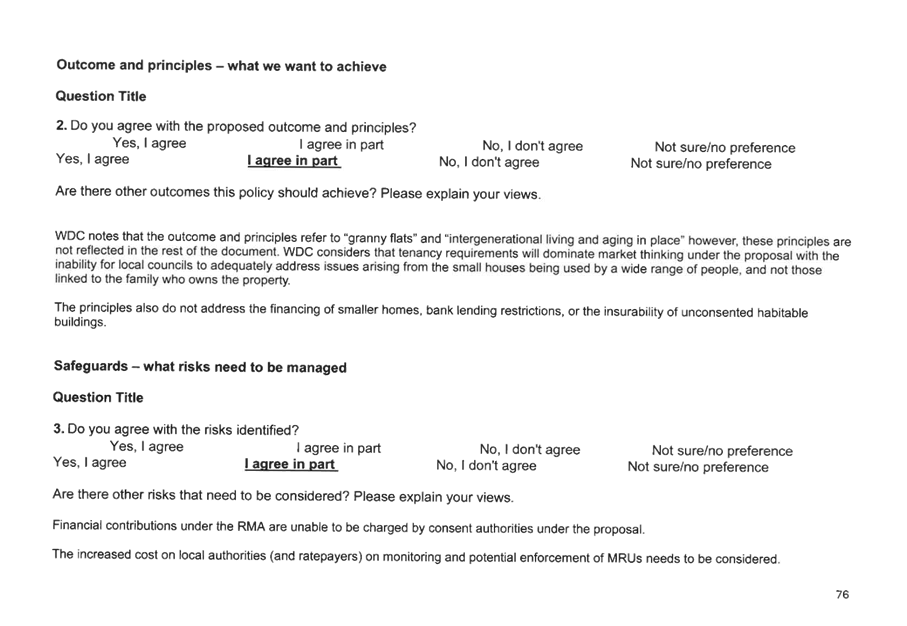
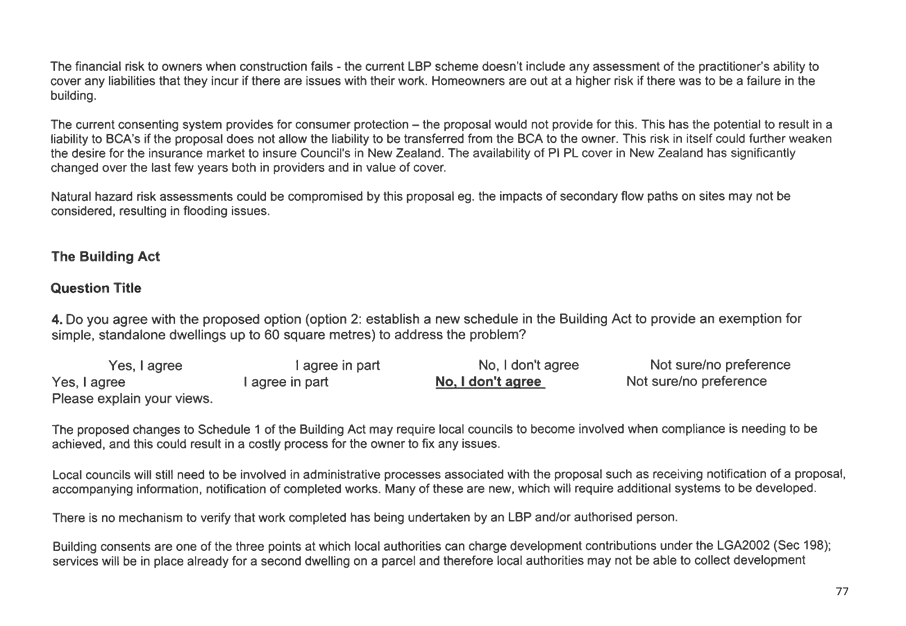
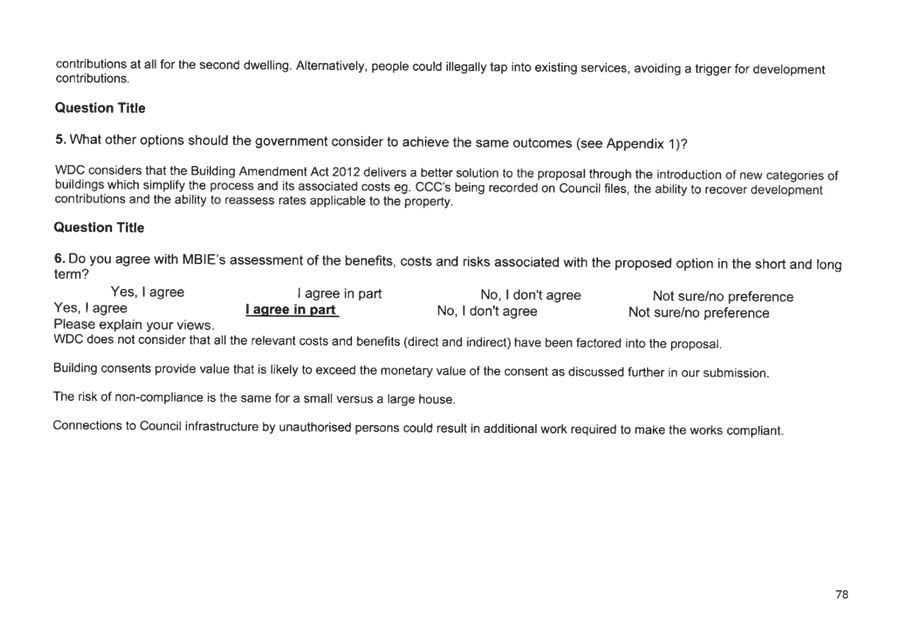
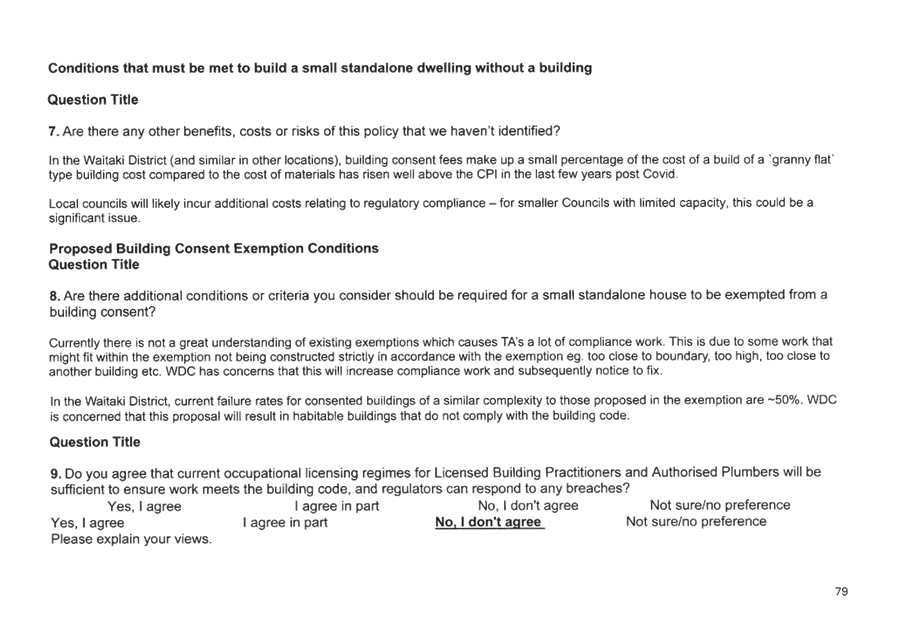
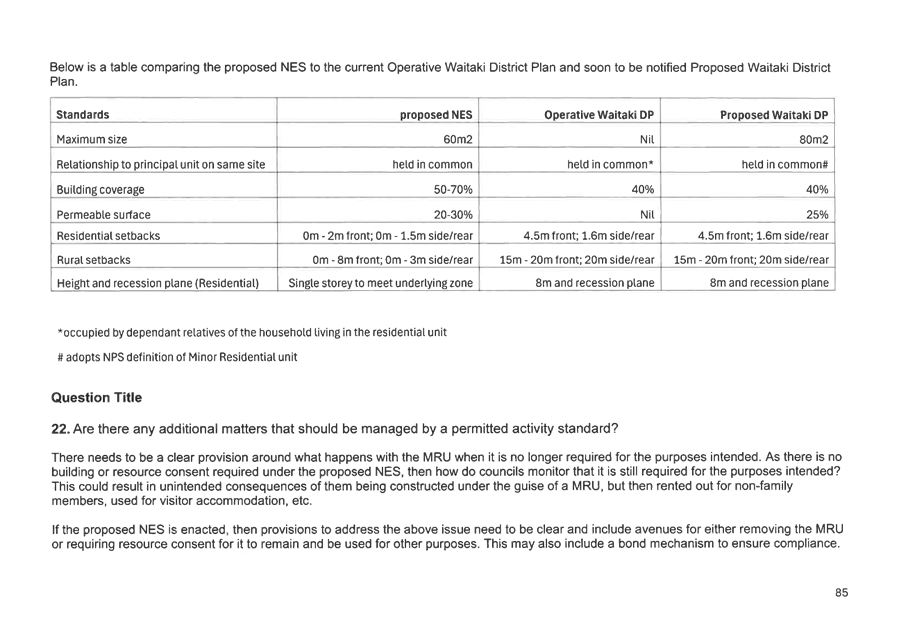
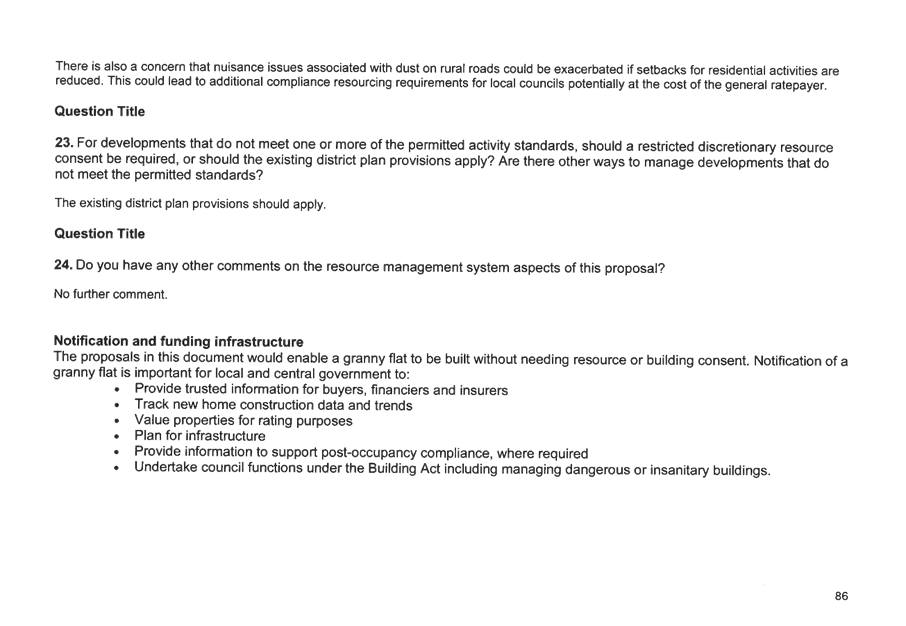
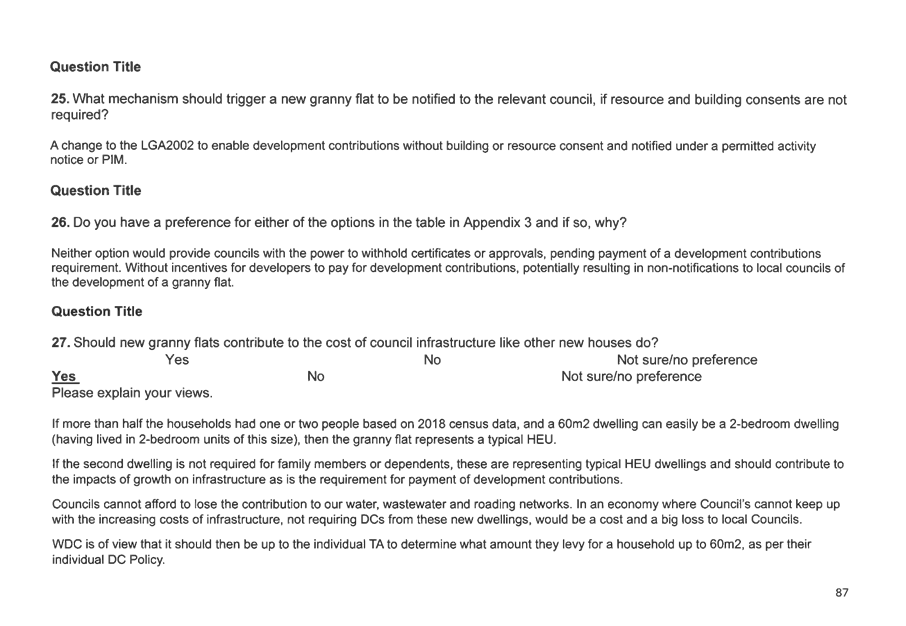
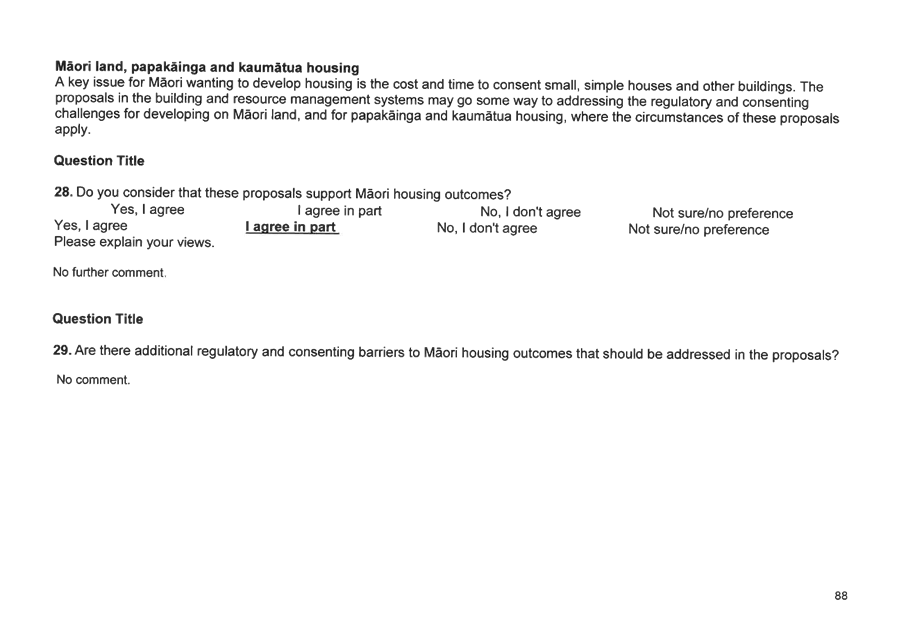
of Council Submission on the matter of the Building and Construction (Small
Stand-Alone Dwellings) Amendment Bill
|
|
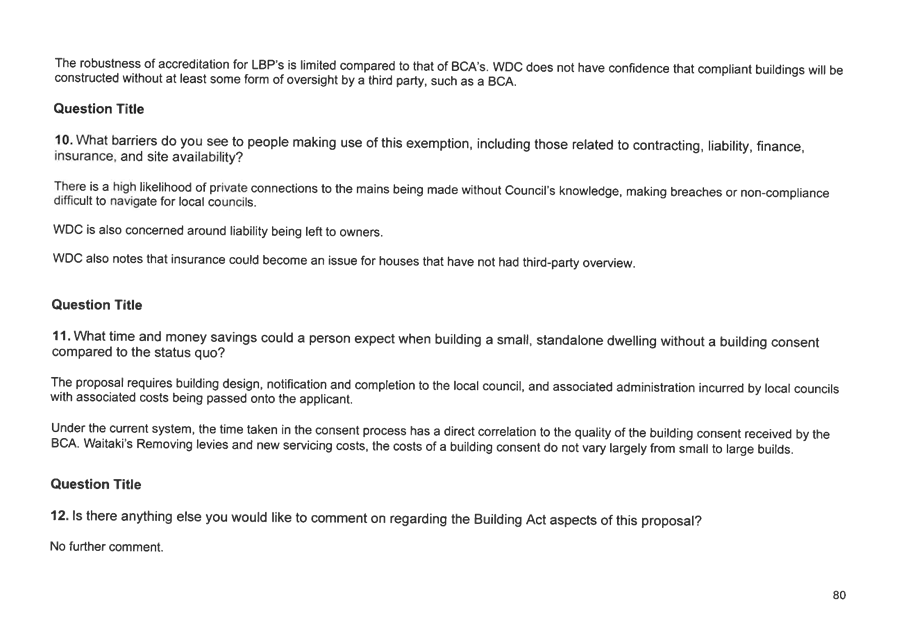
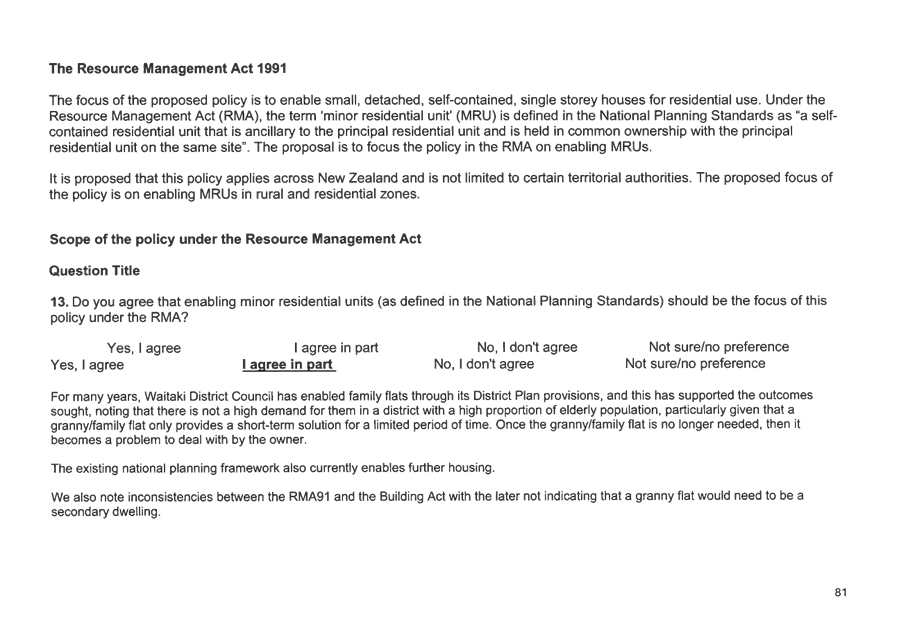
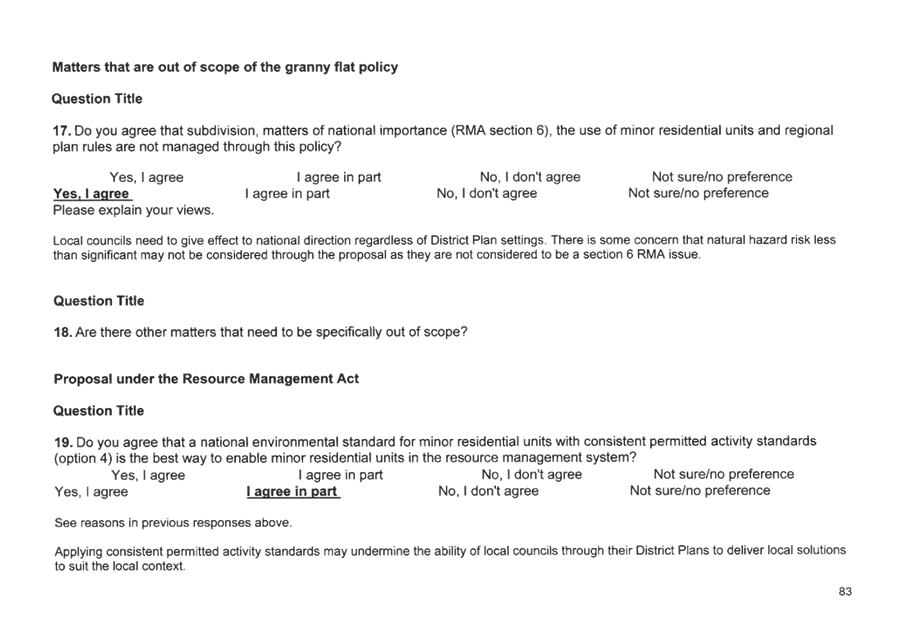
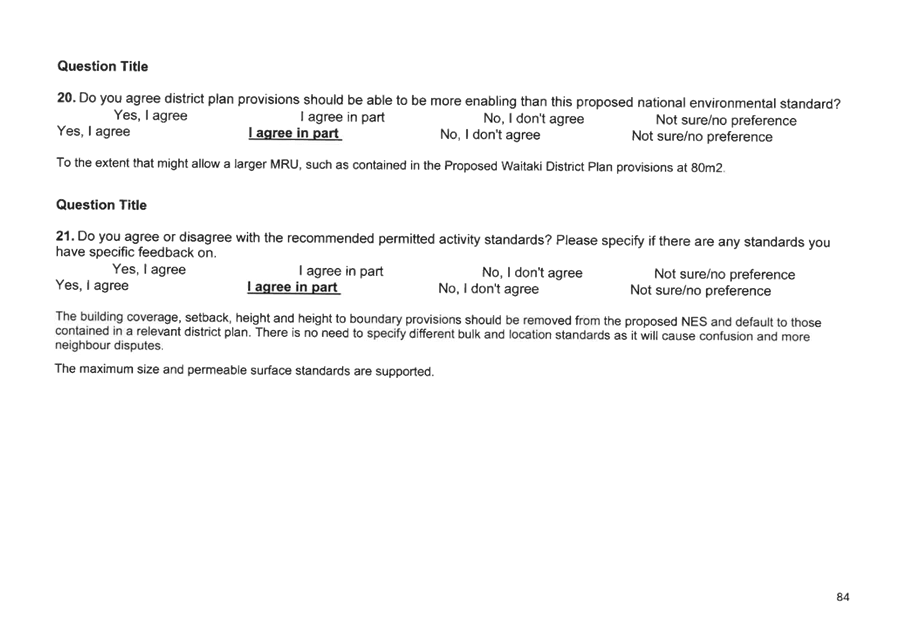
55:33 The
purpose of this report was to retrospectively ratify Waitaki District
Council’s submission on Building and Construction (Small Stand-alone
Dwellings) Amendment Bill as submitted to the Committee Secretariat,
Transport and Infrastructure Committee on 23 June 2025. Several questions
were asked by the councillors and were answered by staff.
|
|
Resolved WDC 2025/077
Moved: Mayor
Gary Kircher
Seconded: Cr Jim
Thomson
That Council:
Formally ratifies Waitaki District
Council’s submission on Building and Construction (Small Stand-Alone
Dwellings) Amendment Bill.
Carried
|
The meeting adjourned for lunch
at 12pm and reconvened at 12.45pm.
|
6.2 Waitaki
Dog Control Bylaw
|
|
1:46:06 This
paper asked Council to adopt into the Waitaki Dog Control Bylaw 2024 and
Waitaki Dog Control Policy following a 6-month trial allowing dogs on-lead in
the Ōamaru CBD, Harbour Street and Ōamaru North CBD areas.
Josh Rendell introduced this report and said the feedback
from the community was overwhelmingly positive, hence the recommendation from
the staff to make this trial permanent.
Andrew Bardsley then provided background information about
the consultation process. He noted the submission from the Penguin Colony as
being especially helpful.
The councillors asked about the need for signage and
communications to inform the public. They then debated whether dogs should be
banned from the Harbour Street area to protect the penguins.
Cr Hopkins suggested an
amendment to the bylaw regarding the situation of dogs on playing pitches and
sportsgrounds. It was important to keep dogs off playing areas. Staff were
asked to fine-tune this to make it clear in the bylaw that dogs were not allowed
on marked pitches.
Cr Blackler suggested that
recommendation 1(b) be removed and replaced with an alternative motion to say
dogs are prohibited on Harbour Street. This was seconded by Cr Hopkins and
debated.
Cr Ryan preferred to keep the
proposed recommendations with the knowledge this could be reversed if a
problem was discovered in the future. She had received feedback that people
had enjoyed sitting outside cafes on Harbour Street with their dogs. The Mayor
agreed.
Cr Hopkins supported Cr
Blackler’s amendment to be consistent with the situation at Beach Road,
where dogs are prohibited. He also asked for an amendment to the wording in
the Dog Control Policy, which was added to the resolutions below.
|
|
Resolved WDC 2025/078
Moved: Cr
Rebecca Ryan
Seconded: Mayor
Gary Kircher
That Council permanently adds to the Waitaki Dog Control
Bylaw 2024 and Waitaki Dog Control Policy 2024, the following change:
a)
Dogs allowed on-lead Thames
Street & Thames Highway, Ōamaru.
That Council amends the
reference to section 3(1)(g) and replaces the words “all marked
pitches” wherever they appear, with the words “all marked playing
areas”.
Carried
|
|
Amendment
Moved: Cr
Tim Blackler
Seconded: Cr Jim
Hopkins
That dogs be forbidden from Harbour Street.
LOST
|
|
Resolved WDC 2025/079
Moved: Mayor
Gary Kircher
Seconded: Cr
Rebecca Ryan
That Council permanently adds to the Waitaki Dog Control
Bylaw 2024 and Waitaki Dog Control Policy 2024, the following change.
b) Dogs
allowed on-lead from sunrise to sunset & prohibited from sunset to
sunrise Harbour Street, Ōamaru, with the commitment to further review if
evidence from the Oamaru Penguin Colony supports the need for this.
Carried
|
|
Resolved WDC 2025/080
Moved: Mayor
Gary Kircher
Seconded: Cr
Rebecca Ryan
That Council approves minor wording changes to the Waitaki
Dog Control Bylaw 2024 and Waitaki Dog Control Policy 2024.
Carried
|
|
6.3 Council
endorsement of agreement with Corriedale Water Management Limited for
operation of Corriedale water supplies
|
|
2:18:29 The
purpose of this report was to establish a formal agreement between Waitaki
District Council and Corriedale Water Management Limited (CWML) that clearly
outlines the requirements for CWML’s ongoing operational management of
the Corriedale water supplies.
The draft agreement is acceptable to both parties and
outlines the expectations of the two parties. Staff were seeking approval
from Council to allow the chief executive to sign the agreement.
The Mayor noted that Gary MacLeod, who manages the water
services, was in the chambers and invited him to join the table. Mr MacLeod
answered questions and further discussion took place on various issues. The
Mayor thanked Mr MacLeod and Corriedale Water Management for their work, and
also thanked staff for putting the agreement together.
|
|
Resolved WDC 2025/081
Moved: Mayor
Gary Kircher
Seconded: Cr Jim
Thomson
That Council:
1. Delegates
authority to the Chief Executive to sign the new agreement for operational
management of the Corriedale water supplies by Corriedale Water Management
Limited, on behalf of Council.
Carried
|
|
6.5 Exempt
Council Controlled Organsations from the Local Government Act
|
|
2:28:09
The purpose of this report was to grant an exemption by resolution of the
Council, in line with section 7 of the Local Government Act 2002, that
Omarama Airfield Limited, Waitaki District Health Services Limited, and
Waitaki District Health Services Trust are no longer legislatively bound by
the requirements of the Local Government Act 2002 that relate to
Council-Controlled Organisations.
An exemption must be granted by resolution of Council and
be renewed every three years thereafter. An exemption can be revoked at any
time.
Cr Blackler asked regarding the legislative requirements
for audit and this was answered by the finance manager.
The Mayor asked if the retirement village trust could be
included in this. The Finance Manager said she would investigate this and
speak to the auditor.
|
|
Resolved WDC 2025/082
Moved: Cr
Jim Hopkins
Seconded: Cr Tim
Blackler
That Council:
1. Resolves
to exempt the following entities from the Local Government Act 2002
requirements that relate to Council-Controlled Organisations:
a) Omarama
Airfield Limited
b) Waitaki
District Health Services Limited
c) Waitaki
District Health Services Trust
Carried
|
|
6.6 Recommendation
to Continue with Waitaki District Health Services Ltd as a CCO until a
Complaint is Resolved
|
|
2:28:39 In
a previous resolution the Council resolved to wind up Waitaki District Health
Services Ltd (WDHSL) by 30 June 2005.
Since that resolution was passed, WDHSL have received a
complaint from the Health and Disability Commissioner regarding the treatment
of a patient in 2023. This impacts the ability for WDHSL to wind up while a
complaint is live.
At the WDHSL Board meeting on June 19th
external Legal Counsel recommended that Council retain WDHSL as an entity
until the complaint is resolved. However, to simplify the accounting
treatment and governance of WDHSL’s property management obligations, it
was advised to reduce WDHSL's asset book and management function, along with
everything associated with it, to the bare minimum.
WDHSL chairman Simon Neale spoke summarised the contents
of the report and then asked for questions. Councillors asked why the
complaint was taking so long. Council had no control over that process, and
it was common for complaints to the Health and Disability Commissioner to
take up to two years to resolve.
|
|
Resolved WDC 2025/083
Moved: Cr
Jim Thomson
Seconded: Cr
Rebecca Ryan
That Council:
1. Resolves to extend the timeframes of the resolution to
wind up Waitaki District Health Services Ltd by 30 June 2025 and continue
with WDHSL as a stripped-out council controlled organisation until the
outstanding complaint is resolved with the Health and Disability
Commissioner.
Carried
|
7 Resolution
to Exclude the Public
|
Resolved WDC 2025/084
Moved: Cr
Rebecca Ryan
Seconded: Cr
Courtney Linwood
That the public be excluded from the following parts of
the proceedings of this meeting.
The general subject matter of each matter to be considered
while the public is excluded, the reason for passing this resolution in
relation to each matter, and the specific grounds under section 48 of the
Local Government Official Information and Meetings Act 1987 for the passing
of this resolution are as follows:
|
General subject of each matter to be
considered
|
Reason for passing this resolution in
relation to each matter
|
Ground(s) under section 48 for the
passing of this resolution
|
|
8.1 - Asset Sales - LTP 2025/34
|
s7(2)(h) - the withholding of the information is
necessary to enable Council to carry out, without prejudice or
disadvantage, commercial activities
|
s48(1)(a)(i) - the public conduct of the relevant
part of the proceedings of the meeting would be likely to result in the
disclosure of information for which good reason for withholding would exist
under section 6 or section 7
|
|
8.2 - Recommendations from the
Development Contributions Subcommittee PE
|
s7(2)(a) - the withholding of the information is
necessary to protect the privacy of natural persons, including that of
deceased natural persons
s7(2)(b)(ii) - the withholding of the information
is necessary to protect information where the making available of the
information would be likely unreasonably to prejudice the commercial
position of the person who supplied or who is the subject of the information
s7(2)(i) - the withholding of the information is
necessary to enable Council to carry on, without prejudice or disadvantage,
negotiations (including commercial and industrial negotiations)
|
s48(1)(a)(i) - the public conduct of the relevant
part of the proceedings of the meeting would be likely to result in the
disclosure of information for which good reason for withholding would exist
under section 6 or section 7
|
|
8.3 - Public Excluded minutes of the
Council Meeting held on 24 June 2025
|
s7(2)(b)(ii) - the withholding of the information
is necessary to protect information where the making available of the
information would be likely unreasonably to prejudice the commercial
position of the person who supplied or who is the subject of the information
|
s48(1)(a)(i) - the public conduct of the relevant
part of the proceedings of the meeting would be likely to result in the
disclosure of information for which good reason for withholding would exist
under section 6 or section 7
|
Carried
|
8 Public
Excluded Section
9 Resolution
to Return to the Public Meeting
|
Resolved WDC 2025/085
Moved: Cr
Rebecca Ryan
Seconded: Deputy
Mayor Hana Halalele
That Council resumes in open meeting and decisions made in
the public excluded session are confirmed and made public as and when
required and considered.
Carried
|
10 Meeting
Close
The Chair declared the meeting closed at 2.09pm.
|
Council
Meeting Agenda
|
26 August 2025
|
5 Leadership
Reports
5.1 Chief
Executive's Report
Author: Alex
Parmley, Chief Executive
Attachments: 1. Annual
Elected Member Survey 2025 ⇩ 
|
Recommendation
That Council receives and notes the information.
|
Purpose
This report aims to update Elected
Members on the progress made toward achieving the Council’s goals and
programme, including the status of the Key Performance Indicators (KPIs) set by
Council for the Chief Executive (and organisation) for the year ending 30 June
2025. This edition also marks the completion of the current KPI cycle and so
does not include the overview of performance within finance, people and
projects, but these reports will continue in the quarterly reports going
forward.
Overview
The
final quarter of the financial year has seen the organisation delivering
several large, priority and in some cases, challenging pieces of work. This
includes:
· Concluding
the Long Term Plan,
· Responding
to the government’s Local Water Done Well reforms,
· Responding
to and considering a significant number of other government reforms that effect
local councils and our communities including RMA reform and the impact on and
uncertainty for a challenging District Plan review,
· Progressing
our Transformation programme, and
· Delivering
our capital programme and “business as usual”.
The past
year, including the last quarter, has seen the organisation, its capacity and
its people stretched to being close to overwhelmed with the volume of high
priority work, while maintaining delivery to our district and communities.
The
Council overall has made good progress on achieving its ambitions while
responding to the reform and challenges and ensuring it delivers its programme
and services.
I would
like to formally record my thanks for the efforts and commitment of staff and
the Governance Team to the Council and our communities over such a challenging
year.
The
staff team and I remain focussed on working with Governance to continue to
deliver and embed transformation so we can achieve our ambition to be “a
leading, innovative Council delivering the best for our communities” and
realise the benefits we want for our organisation and the communities we serve,
including:
· greater
value and efficiency,
· improved
levels of customer service,
· stronger
local focus and connection,
· becoming
an employer of choice to retain and attract the skills we need to deliver for
our communities, and
· improved
communication, engagement and partnering with our communities.
Transformation
After
two years (2022/3 and 2023/4) of considering the case for change, developing
the business case, and then working with staff and Governance on designing the
programme of change, this past financial year (2024/5) has been the year in
which we commenced implementing the Transformation Programme and the changes
within it. This is the biggest change this organisation has been through since
it was established in 1989 and a huge undertaking for the organisation. It is
more apparent than ever, with the changes impacting local government, that
embarking on the Transformation Programme was the right thing to do.
Transformation
has seen a fundamental change in model and approach to how the council delivers
and conducts its business. Staff from across the organisation have shown
courage, determination and commitment to the organisation and the communities
we serve, in delivering change. This has been despite the personal
uncertainties change has brought; the other additional work priorities that
have emerged; and while largely maintaining services and business as usual to
our communities.
The
Transformation Programme has delivered significant achievements and
improvements in how we deliver services to the community, but with more
benefits to come. While the business case set out that many benefits would not
be fully realised until two to three years after implementation, improvements
are increasingly apparent. It was always understood that transformation would
be difficult at various times. However, several unforeseen factors have made
transforming Council more challenging than anticipated.
The
Council’s decision to embark on transformation began out of a desire to
do more with the resources it had available so it can deliver the best for the
district, residents and customers. And while there would be benefits, it was
known that these would take two to three years from implementation to be
realised. The Council’s leadership knew transformation would be difficult
at various times and has had to take place alongside:
· The
Government’s water reforms and the changes in policy– 3 Waters,
Affordable Waters, Local Water Done Well
· The
pressures on local government finances (including from water reform) resulting
in a challenging, time consuming and resource intensive Long-Term Plan (LTP)
· The
additional time and resources required for the District Plan.
While these factors have placed
additional pressure on the organisation, on top of the pressure of change, it
has not derailed the trajectory of transformation. The Transformation Programme
is within its final six months, with the organisation having fully implemented
its new structure and all new teams now operational, albeit not all changes and
new ways of working up and running yet. The focus is now shifting towards
embedding transformation outcomes, ensuring momentum is maintained, and
preparing for a seamless transition into a continuous improvement framework,
post-programme closure at the end of 2025. The programme’s status
reflects measured progress across key areas, a clear understanding of remaining
work, and a proactive approach to overcoming ongoing external and internal
pressures.
The Council has successfully implemented significant
structural changes to support its new operating model, breaking down
traditional silos and enabling greater cross-departmental collaboration and
visibility of work.
Implementation of a new Customer Service Model is
improving access to customer services and increasing the speed of service
delivery, as well as ensuring greater efficiency in use of resources. This is
being enabled by:
· A new service desk at
Oamaru Library providing extended hours of service including Saturdays for
first time, whilst reducing resource requirements.
· An AI bot supporting
customer operatives, helping move towards a target of 90% of enquiries dealt
with at first point of contact, speeding up service, reducing routine issues
going into the back office that cause delays and take up time and specialist resources.
· Digitisation of all
Council forms – improving access to services whilst also delivering
back-office efficiency savings.
· Digitisation of property
files – improving access for customers to property information and
enabling self-service which produces efficiencies in saved staff time.
· Implementation of a Case
Management approach for applications and complex requests – improving
levels of service, improved support for customers, removing the need for
customers to navigate their way around different departments and providing
efficiencies as less time is taken up of specialists.
· Customer Portal
implementation in progress to provide full self-service across the range of
council services, give easy access to residents on the information we hold
related to them – which will help shape and reduce demand and reduce the
cost to serve.
The development of a Locality Model is enhancing our
connection with and responsiveness to our local communities. Area Leads in the
infrastructure team provide local focus in planning local programmes of work as
well as a more responsive service for Community Boards and communities. Locality
Officers are part of Case Teams but connected to the Customer Team and
Infrastructure Team and are our eyes and ears on the ground, enabling us to be
more proactive, more connected to communities and improve efficiency. When
fully embedded our locality model will enable clear local delivery plans and
provide performance reporting on a locality basis to assist more local focus
and continuous improvement.
Establishing a Project Management Office (PMO) is
supporting higher standards of project management, enabling us to ensure
improved value for the ratepayer and supporting an improved delivery rate of
projects and our capital programme. There is more robust challenge around value
for ratepayer funds in terms of quality and cost together with more rigorous
project performance management instituted and which is now reported to Council
and the Senior Management Team. Improved processes are being put in place, which
to date includes project initiation processes and rigorous business cases for
projects.
Our approach to Asset Planning has been refined, and
this will enable an integrated programme across our assets and better asset
information that will produce efficiencies. This is a long-term benefit change
but already the team are integrating the various programmes of work which were
originally planned separately. Our improved Communications and Engagement
approach supported by a new strategy and a single engagement team where
previously our engagement staff were distributed around the different
departments, is starting to ensure better information dissemination and higher
levels of community engagement.
Investment in and use of technology, including AI, is
supporting improvements across the organisation. This is supporting our
customer service model enabling more efficient and higher levels of service. It
also includes many improvements to back-office systems that help remove or
automate previous inefficient processes that were a frustration to staff and
took resource away from delivery. These systems are also providing staff with
better information and self-service options that reduce demand on support teams,
improves service, and enable resources to be devoted to activities that add
more value to the Council and our communities.
We have commenced the deployment of an Organisational
Performance Management Framework which is supporting moving the
organisation from an activity focus to an outcomes, value, performance and
continuous improvement focus. This is work in progress and there is much more
to do, including embedding continuous improvement processes. This ambition has
been one of the most challenging projects for the council. However, the
organisation and all teams now have clearer work objectives and performance
measures and there is a more robust framework governing individual staff
performance. The recent commencement of Council Benchmarking by the Government
will also be helpful in tracking our progress and performance as an
organisation and support the drive for continuous improvement.
There has been considerable progress in people and capability
management to realise our ambition of becoming an Employer of Choice so
we can retain and attract the skills we need to deliver effectively for our
community. Our new People Strategy provides the focus for this. It has
led to a review of our contracts and terms so that our offer is competitive and
we can maximise the appeal of less costly non-financial benefits. There is a
complete new suite of role profiles across the organisation that are community
outcome focussed and less task focussed. In addition, the Competency Framework
with its focus on attitudes and behaviours provides for a more robust approach
to recruiting the right people with the skills and attitude we need and to
managing and enabling high performance. There has been progress in supporting
leadership skills and development in the organisation which is important in
helping to create a high performing organisation and reshaping the
organisational culture. Reshaping the organisational culture is a long-term
undertaking and is a work in progress to foster a more empowered workforce that
is focussed on customer and community outcomes, takes responsibility and is
accountable.
Transformational change of this
scale can be disruptive for organisations, BAU delivery, customers and staff.
Overall though, during the transformation, services have largely been
maintained with minimal levels of disruption and our capital delivery rate has
gone up, with the main projects - including large projects such as the Network
Waitaki Sports and Events Centre, the Forrester Gallery Extension and the
Kakanui Bridge replacement - being progressed successfully. Exceptions are
within the library service, where there was temporary disruption, and within
governance support, where we struggled to find the capacity to make the planned
changes initially, in the context of additional and complex meetings and
whereas a result, the service standards dropped for a period. The focus on
maintaining BAU across the organisation during the changes, and the fear of
failure and the consequences of this, has put a lot of pressure on staff and
has slowed the progress of Transformation, but has not stopped it.
Work is progressing on transferring
responsibility for Transformation outcomes and benefits into teams’
business-as-usual operations and the new performance management framework as
the organisation practice becomes increasingly one of continuous improvement.
In the meantime, focus for the remainder of the programme will be on
progressing the implementation of plans to deliver the target outcomes and
benefits in the following areas:
· Customer service
model, including locality
· Performance
management
· Project Management
Office
· Cultural Change
· Embedding
prioritisation
· Updating the
management / operational leadership model to clarify terms of reference and
remits
Long
Term Plan (9 Year Budget)
On 30
June, Council adopted its Long Term Plan and 9 year budget. This has been the
most challenging LTP this council has faced with significant inflation and in
particular the cost of complying with water standards driving up costs at a
time when large parts of our community are feeling cost pressures in their
household budgets. The financial challenges we faced have meant that the
process we went through was not the one we originally planned and different to
what Council agreed at the start of the process. There were significantly more
briefings and workshops than originally planned to scrutinise every part of the
organisation and understand all of our costs and opportunities to reduce these.
Whilst
our approach to the LTP has evolved slightly from that in the past to be more
focussed on outcomes and value for communities, there is still scope for
improvement in approach. Following a feedback session with the Governance Team
we will now progress capturing the lessons learned and identifying the
opportunities for improvement so that we can have an enhanced process to
support the new Council in prioritising, ensuring a clear outcome focus, and
also be able to plan for the different needs of our different communities,
including with our community boards in Ahuriri and Waihemo. Following the
Council’s decision to retain water service in house, we will also now
plan for an LTP amendment process early in the new triennium, to reflect water
services now remaining within Council after 2027.
Elections
We have
continued to prepare for elections, focussing our communications on encouraging
people to consider standing for Council or their local Community Board. It is
pleasing to see a good field of candidates come forward to stand to represent
their communities with no costly byelections being required and a choice of
candidates for most seats. Our communications focus has now turned to
encouraging people to ensure they are registered to vote and then encouraging
people to vote.
Work is
nearing completion on putting in place an Induction Process for a new Mayor,
the new Council and our Community Boards. A good induction programme is
essential to ensuring that, whatever background our Elected Members are from,
everyone is equipped with the skills and knowledge to perform the governance
role. In doing this, our induction will be aiming to ensure the new Mayor,
Councillors and Community Boards are set up and supported to be successful in
delivering their ambitions for our district and community. The feedback
received on the previous Induction Programme together with the survey on
support for Elected Members, has been invaluable in ensuring we can develop and
improve our support for Governance.
Local
Water Done Well
The last
financial year has seen considerable work undertaken on understanding and
responding to the Government’s Local Water Done Well reforms. The
timeframes given to councils by the government to submit our Water Services
Delivery Plan are short. Such an important strategic decision with such a big
impact on our organisation and the communities we serve deserves more time to
consider than we have been given. There has been a lot for all of us and our
communities to understand in the intent and the implications of the
government’s reforms, including that maintaining the status quo is not an
option, and that all available options will see significant increases in water
charges for our community. All options have up sides and down sides and
whatever option is selected, councils will have less control of water with more
power given to regulators in the form of the Water Services Regulator and the
Commerce Commission as economic regulator, who between them determine the
standards, and can determine investment levels and revenue & charges, of
Water Services Organisations, whether a CCO or in-house operation.
With the
decision by Council to deliver water services inhouse, Council will need a new
organisational strategy to continue to reshape how it works and delivers. This
will need to take account of the progress made in the Transformation Programme
and continue to realise the benefits of the changes, and enable & ensure
the creation of a ring-fenced inhouse business unit for water The strategy will
need to continue progress on maximising efficiency and support a focus on
priorities, to ensure delivery for our district and communities whilst
minimising the cost impact on ratepayers. Work is commencing on the development
of a new organisational strategy which will support the review of the LTP and
the Water Services Delivery Plan and associated Implementation Plan.
KEY PERFORMANCE INDICATORS (KPIS)
The following KPIs for the Chief Executive for the year
ending 30 June 2025 were agreed and adopted on 24 September 2024.
KPI 1 – TRANSFORMATION DELIVERY
|
KPI – Delivery/Implementation of Transformation Programme – Changing the Way We Waitaki
|
|
Objective:
Build the best council in NZ
that empowers people
and communities, is
ambitious and high performing, and
delivers excellent outcomes
· an ambitious council
seeking to deliver the best for the district and residents
· focussed on
role as a community organisation and community leader
· flexible, agile and data
driven, focussed on performance and continuous improvement
· modern, efficient, effective, customer focussed services
· well governed
· a leading employer
with an empowered workforce
· One Team in all
that we do
|
|
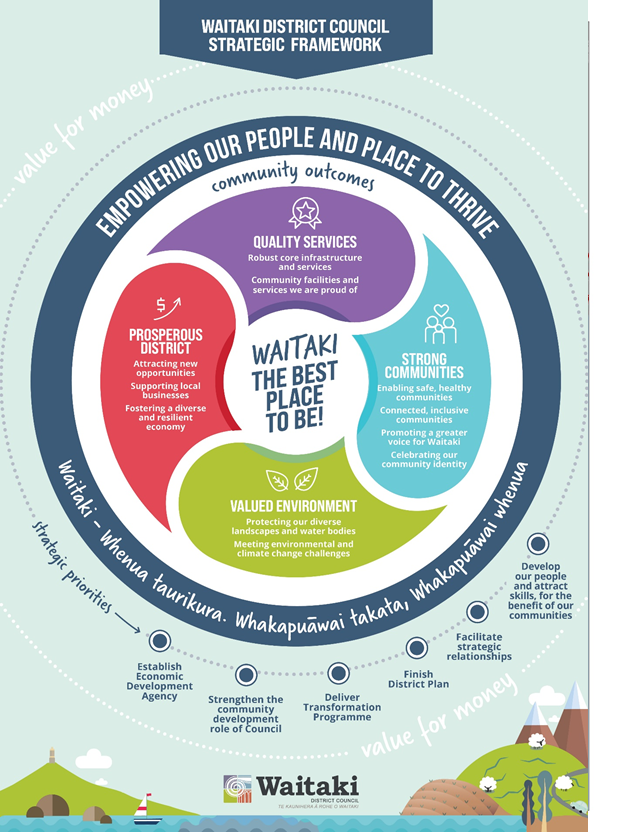
Strategic Framework:
Deliver Transformation Programme
– Changing the Way We Waitaki
|
|
Key Results: (series of
results that will enable successful delivery of the objective)
1. We
deliver a customer experience that we’re proud of
• Interactions
with Council are frictionless
2. We
do the right things at the right time for our community
• Responsive
to real needs of community
• Delivering
on our promises
• Understanding
our community
3. We have a
reputation as a trusted partner
·
We have the agility to thrive
·
Responsive to change
·
Fit for purpose technology
4. We
live within our means adding value for money
• Reduced costs of living in
community
• Rates
viewed as an investment
• Council gives more
than it takes
5. We are an employer
of choice
• Staff proud to work at
Council
6. The Governance
Team and Community Board members are supported to carry out their governance
roles.
|
Key Measures: (initial measures, but not limited to
these measures)
· Effectiveness – Achieve greater than 80% of
key performance outcomes as
agreed in the Annual Plan.
· Efficiency – Improve the delivery of new and existing council provided services by 10% by implementing better
processes and tools.
· Effectiveness – Reduce the cost to deliver
council provided services by 10% to reinvest in new
council provided or partner services.
· Community
– Involve partners in the
delivery of 10% of existing and new council services to support
the delivery of the
community outcomes.
· Achievement
of a 5% increase in the Culture measure, for each undertaking of the survey,
in the Council’s chosen Staff Engagement Survey.
· A
baseline measurement is introduced during the 2025 calendar year, to be
measured on an annual basis.
|
Progress Update:
1. We
plan to close the Transformation Programme by the end of 2025. This does not
mean that we will have fully complete the transformation process and achieved
all of the outcomes and benefits. Whilst we can now see the benefits of
Transformation starting to be realised, as set out in the business case agreed
by Council, the benefits of transformation will not be fully realised until two
to three years from implementation. Work is progressing on the final stages of
the programme and the transition of the transformation ambitions and outcomes
in the BAU of the organisation, including in how the organisation manages
performance and supports continuous improvement. This will include ensuring
that metrics relating to the outcomes and benefits of transformation are
reflected in the performance management information and reporting. Annual
reports will document Council’s performance against Annual Plan metrics,
starting with the 2025/26 annual report as the initial point of comparison.
2. All
Council forms are now available online, with many supporting payments and
integrating into business workflows. New self-service tools—including
knowledge base articles and an automated customer assistance to give residents
24/7 support - are live on our website. Progress continues on i) the
introduction of a Customer Portal to provide improve access to services for
self-serve and to customer information; ii) making available on line all
property files iii) an online booking system which – all of which are
planned to launch in late 2025 and which will improve access to and levels of
service.
Ongoing
efficiency improvements are anticipated in the coming months as the Performance
and Continuous Improvement team advances the foundation set by the
Transformation Programme. Employees will experience further enhancements
through the implementation of updated workflows, while customers will continue
to benefit from new tools and processes designed to strengthen and expand
Council services.
3. Several benefits of transformation have been observed in both
communication strategies and community engagement, with increasing levels of
participation and interaction. The implementation of the locality model, along
with place-based planning and service delivery, is beginning to yield positive
outcomes. Further results are anticipated as these new approaches become
further integrated over the next 6 to 12 months.
4. The
recent Staff Engagement Survey reported an employee engagement (culture) score
of 67% (3.37/5), an increase from 65% in 2023.Teamwork and collaboration are
recognised as key organisational strengths, with the majority of employees
reporting collegial support. Additional positive elements include
well-established team dynamics, leadership initiatives designed to provide
support, autonomy within individual roles, and effective managerial mentorship.
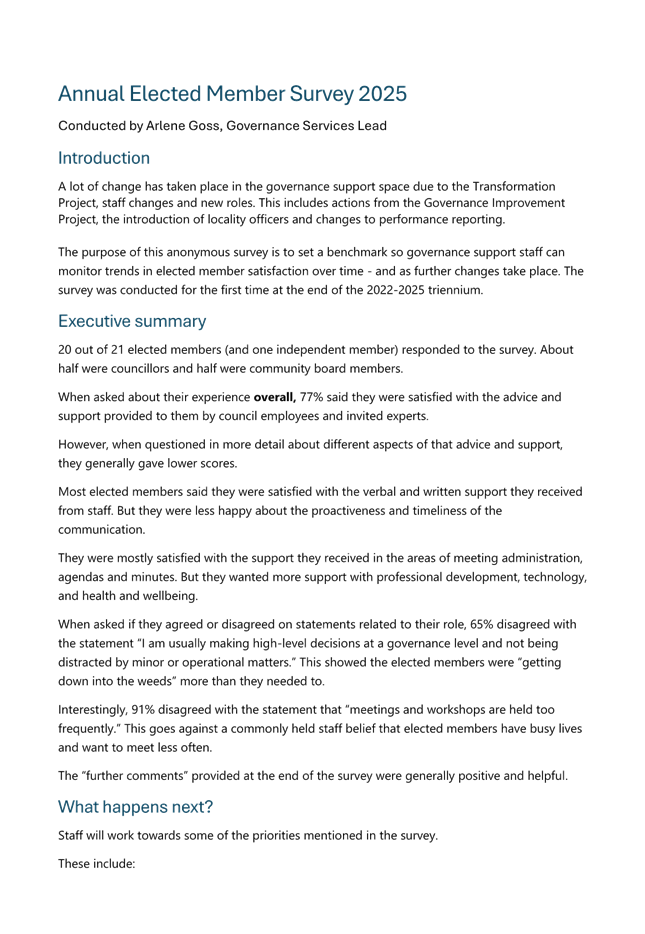
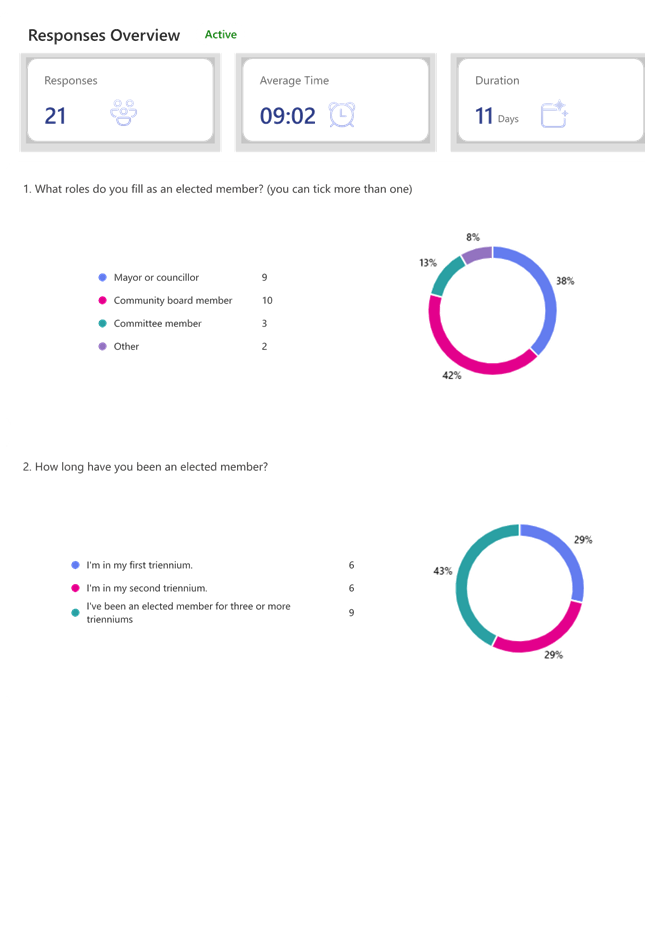
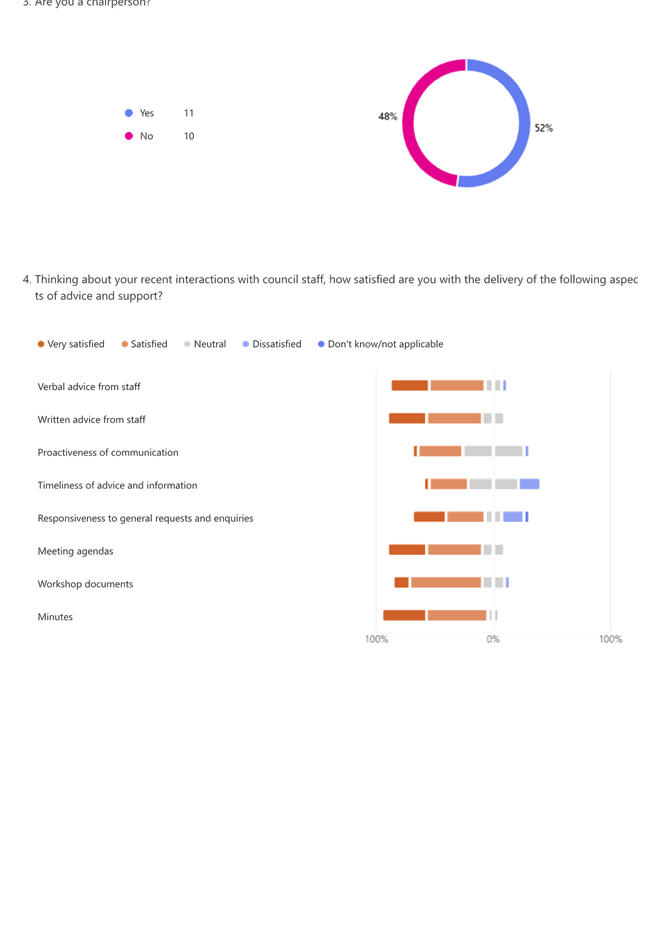
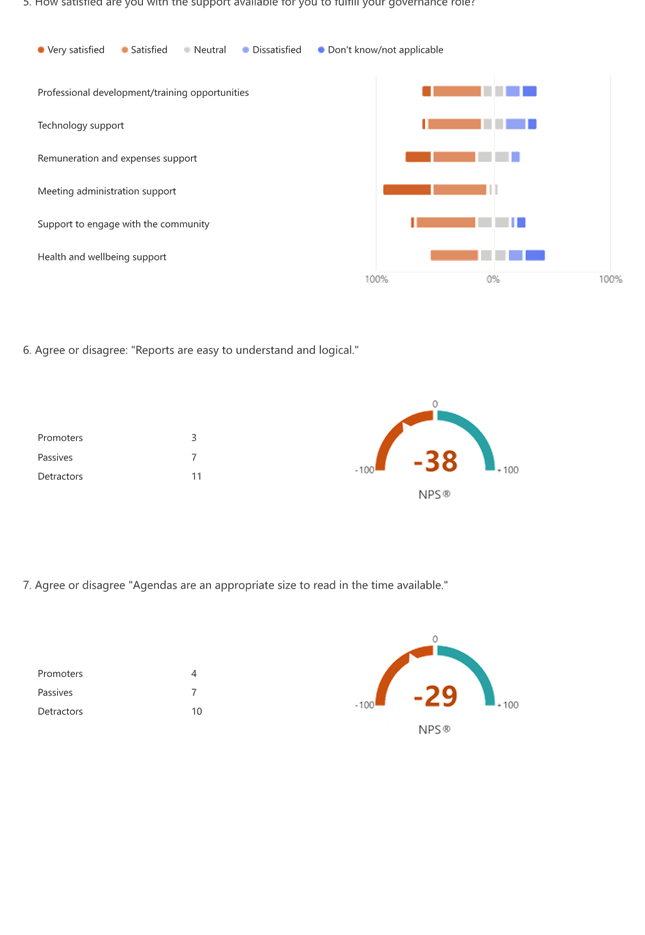
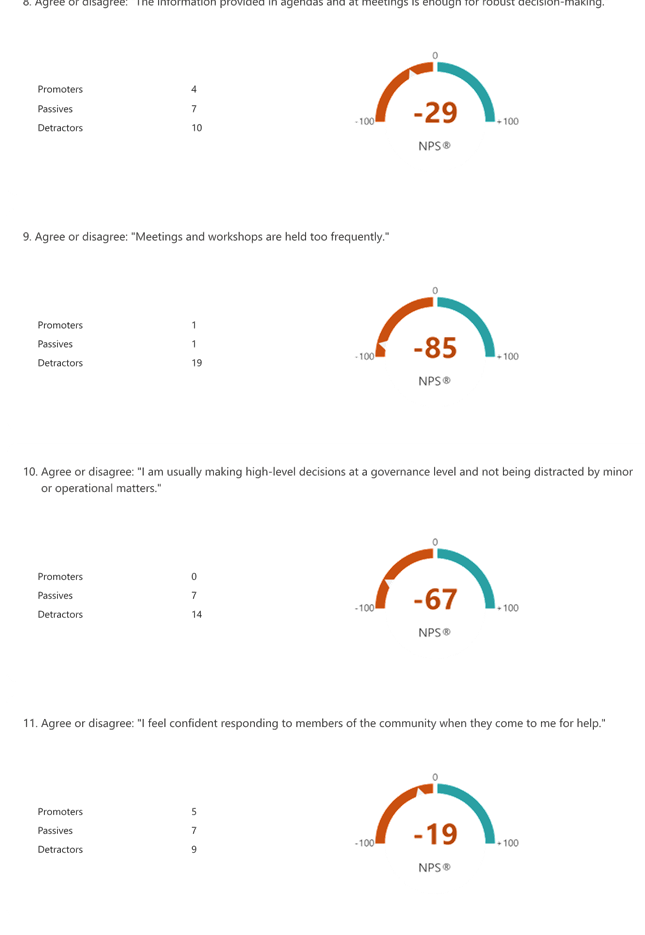
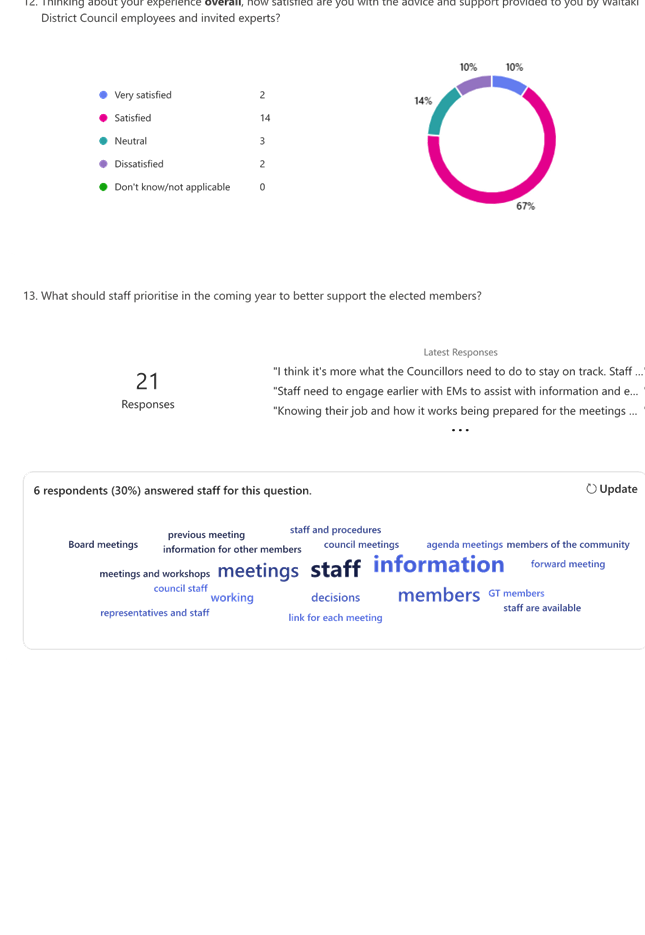
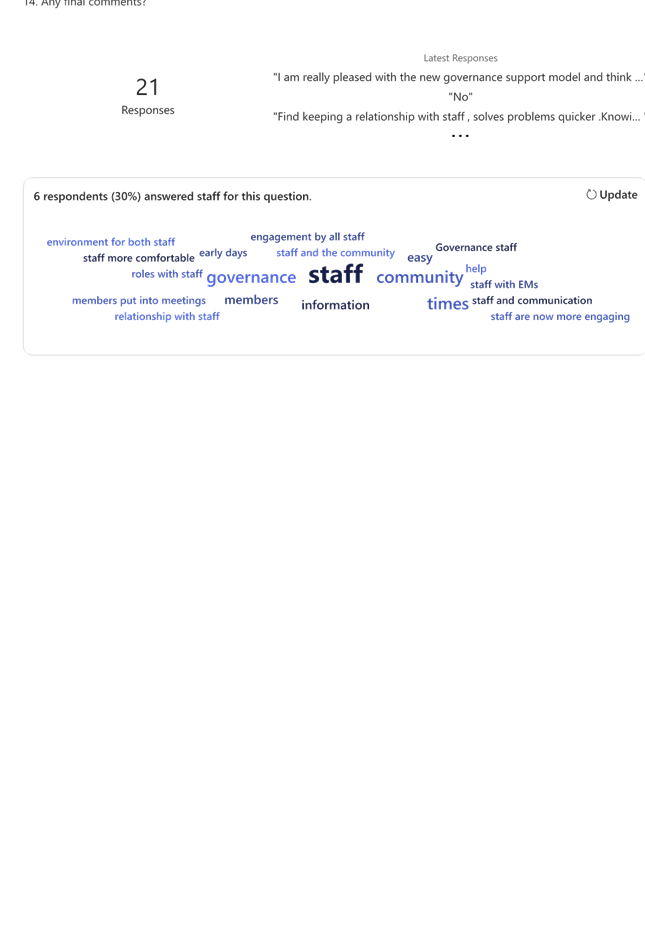
5. A
survey has recently been conducted of Elected Members to establish a baseline
measure of the level of support governance receives. The results of the survey
are attached to the report and demonstrate positive satisfaction with the
support for Elected Members and in particular, the improvements made, but point
to areas where further improvement can be made as part of our continuous
improvement approach.
KPI 2 – COMMUNITY OUTCOMES
|
KPI 2a – Quality
Services
|
|
Objective:
Deliver modern, effective customer services within
a culture of continuous improvement.
|
|
Strategic Framework:
· Robust core
infrastructure and services
· Community facilities and services we are
proud of
|
|
Key
Results: (series of results that will
enable successful delivery of the
objective)
1. Support our district to thrive via sustainable, resilient, and
reliable networks and infrastructure
2. Enhance access
to current and future
services for the community through user-friendly and convenient options
3. Improve community wellbeing through enabling the provision of a highly valued and financially sustainable network of community facilities
4. Council as an
organisation delivers value and improvement efficiently and effectively to the district
|
Key Measures: (initial measures, but not limited to these measures)
· By
achieving an overall satisfaction rating with the Council’s performance of 60% from resident surveys
· Reduce
the need for over-the-counter service
by 20% in the 12 months following the implementation of the new
Customer Service model
· Achieve
an overall satisfaction rating
with quality of life in the district of at least 85% from resident surveys
· By
implementing agreed outputs of the Transformation Programme by the end of the financial year
(see KPI 1 for more detail)
|
Progress Update:
1. The
Resident Satisfaction survey is currently being finalised, and a full report
and analysis is planned to be tabled at the September meeting of Council. The overall
satisfaction rating was 44% in 2025, below the target of 60% and down from 48%
in 2024. Satisfaction with sealed roads declined from 42% in 2024 to 39% in
2025, while satisfaction with unsealed roads saw a slight increase, rising from
29% to 31% over the same period. Additionally, satisfaction with the water
supply experienced a small decline, dropping from 75% in 2024 to 70% in 2025.
The average satisfaction scores for Roading and Waters changed from 48.6 in
2024 to 47 in 2025. Overall, Councils across the country are experiencing
declining satisfaction increasing distrust. In addition, in implementing large
scale organisational change programmes it is common to see an impact on
customer satisfaction. However, this does not mean that the level of
satisfaction is accepted, and the results of the satisfaction survey will be
used as a focus for the Council’s continuous improvement.
2. All hardcopy and PDF forms related to
core services have been digitised. Additional self-help and self-service
features, including webchat and a knowledgebase, are now available to decrease
over-the-counter transactions. A baseline for the 2024/25 financial year will
be established and compared at the conclusion of the 2025/26 financial year.
3. Overall
satisfaction with facilities shifted from 78.8% in 2024 to 75.9 in 2025.
Satisfaction at Oamaru Opera House changed from 91% in 2024 to 89% in 2025.
Parks and Reserves maintained a consistent satisfaction rate of 80% across both
years. Sports fields and facilities moved from 75% in 2024 to 73% in 2025.
Campgrounds recorded 72% in 2024 and 69% in 2025. Public toilets had a
satisfaction rate of 70% in 2024 and 72% in 2025. Aquatic Centre figures were
75% in 2024 and 76% in 2025. Cemeteries went from 81% in 2024 to 76% in 2025.
Libraries measured 85% in 2024 and 74% in 2025. Resource Recovery Park showed a
satisfaction rate of 80% in 2024 and 75% in 2025.
3. The
KPI for delivery of the Transformation outputs is considered complete for the
financial year, with all four transition stages finished on schedule as
outlined. Expected benefits are projected to continue to be realised as
planned, over the upcoming months and years, in accordance with the benefits
realisation indicated in the initial business case and mandate for change. The
operating model and associated teams and departments will continue to develop
and be embedded as new working methods are implemented.
|
KPI 2b – Strong
Communities
|
|
Objective:
Support and enable our communities to improve wellbeing
|
|
Strategic Framework:
· Enabling safe
and healthy communities
· Connected, inclusive communities
· Promoting a
greater voice for Waitaki
· Celebrating our
community identity
|
|
Key Results: (series of results that will enable
successful delivery of the
objective)
1. Support and promote public health and
wellbeing through community initiatives and programmes.
2.
Promote diversity and cultural understanding within the community and within Council
3.
Facilitate the development of an “intentional plan” with the Council Governance
Team that enables
the Waitaki community to have
local input into regional and central government decision-making – engage with ministers and officials to advocate
for Waitaki.
4. Support and promote local arts, culture, sport, and
recreation
|
Key Measures: (initial measures, but not
limited to these measures)
· By
increasing Council participation in education and
awareness by 50%
· By increasing the delivery of cultural competency education programmes to
14 by
the end of the year
· Engaging in 75% of all relevant submission opportunities
· By
growing utilisation and participation by 5% year on year
|
Progress Update:
1. The Warmer
Waitaki Curtain Bank initiative has been successfully launched, with
operational training provided by the Dunedin Curtain Bank, enabling volunteers
to begin their work and local service providers to start making referrals. In
addressing homelessness, Stronger Waitaki organised a hui with community
partners to complete a stocktake and gap analysis of available services and to
identify suitable referral pathways. This gathering not only facilitated
connections among service providers and community groups, fostering
collaborative opportunities, but also saw attendance from 40 individuals
representing 25 organisations. Additionally, a partnership has been formed with
Fire and Emergency New Zealand to assist locality officers in delivering fire
safety education to people living rough. Stronger Waitaki remains committed to
strengthening home-focused referral pathways and processes between service
providers. Efforts are ongoing to review existing successful models,
investigate technology-enabled solutions, and seek funding opportunities to
further support this work.
2. The Arts, Culture and
Libraries team, collaborating with the Strategic Communications &
Engagement team, has delivered 14 Mātauranga Māori programmes between
September and November, and is planning a series of evening events to promote
diversity and cultural competence in the community. They have also organised a
Matariki programme, including community events and the George Burns Memorial
children’s art exhibition with a Matariki theme, in June in conjunction
with the public holiday.
3. Between June 14 and
July 31, 2025, a total of ten submissions were made, comprising six direct
Council submissions and four in collaboration with Taituara. The direct Council
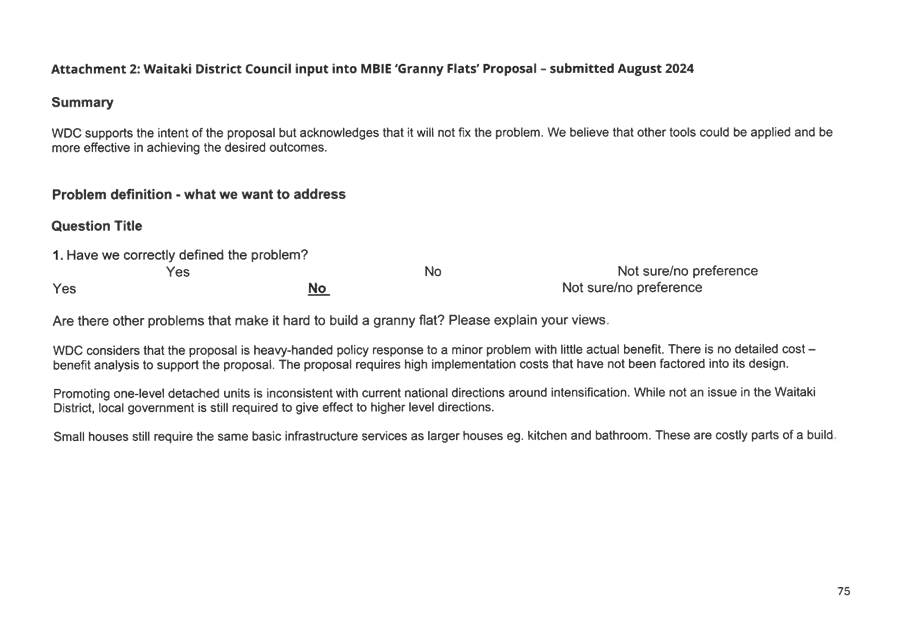
submissions included the Building and Construction (Small Stand-Alone Dwellings)
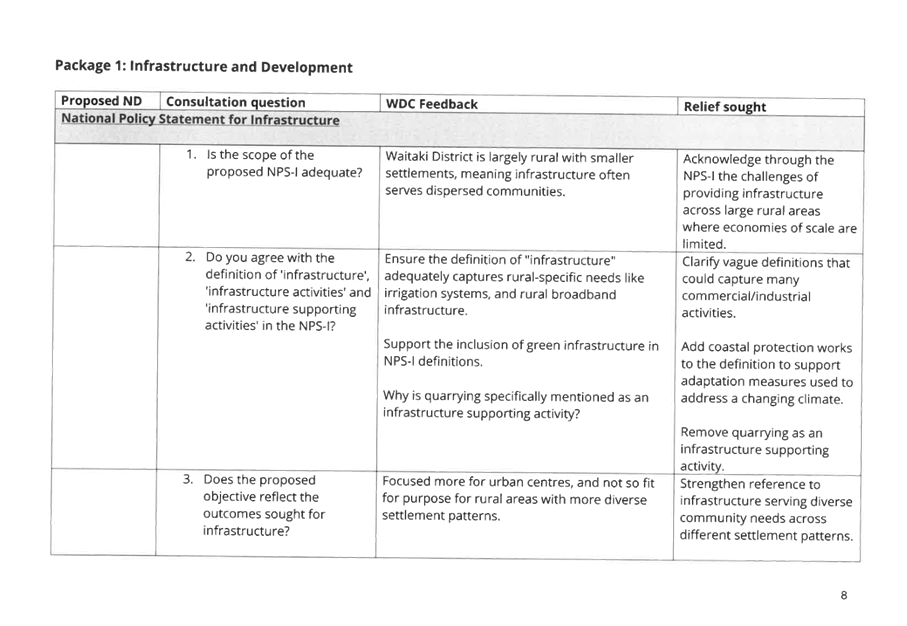
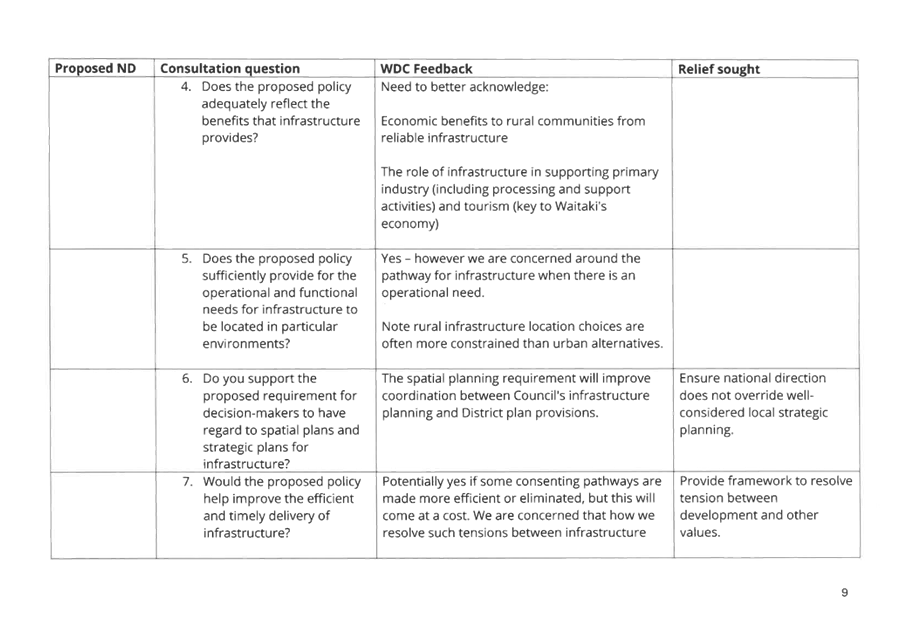
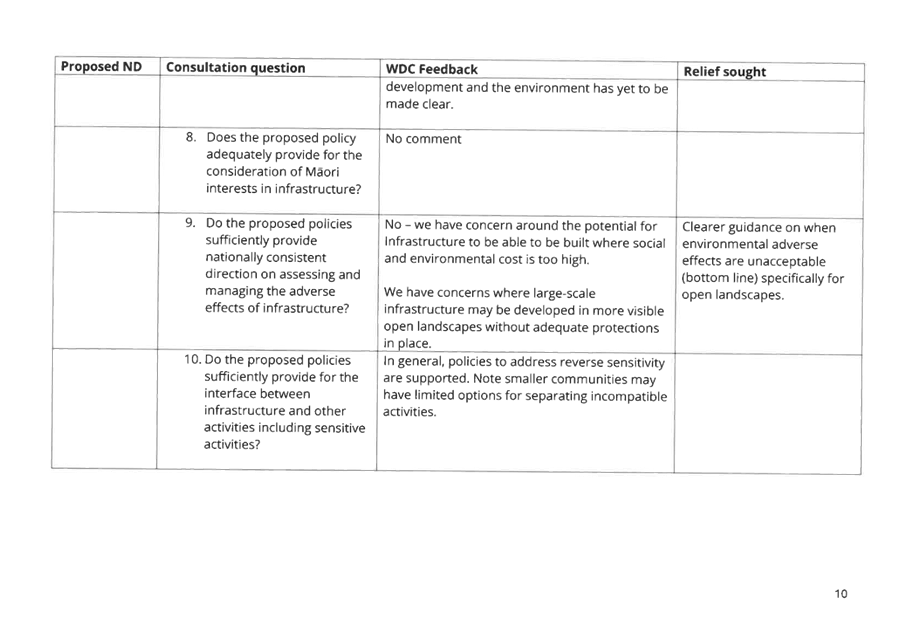
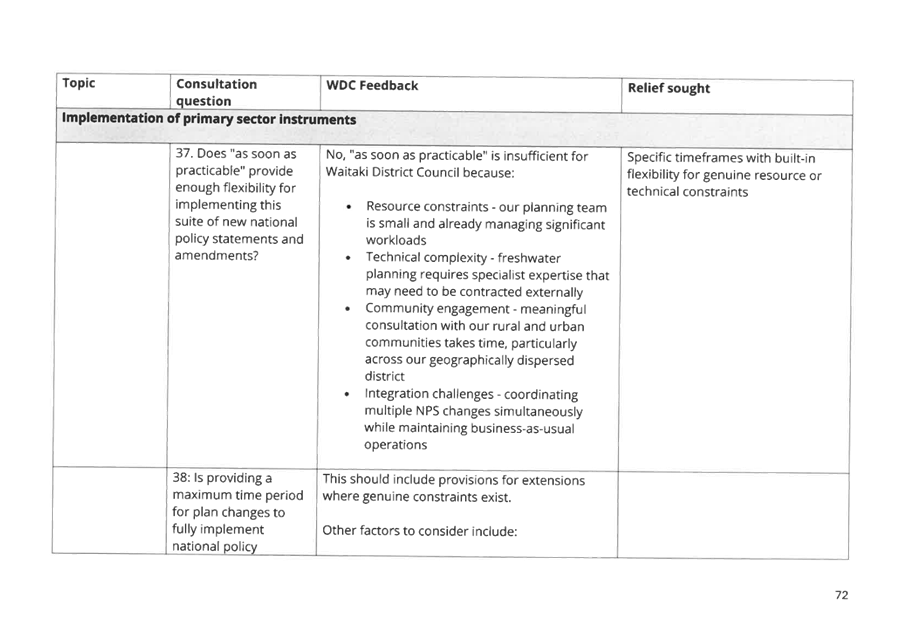
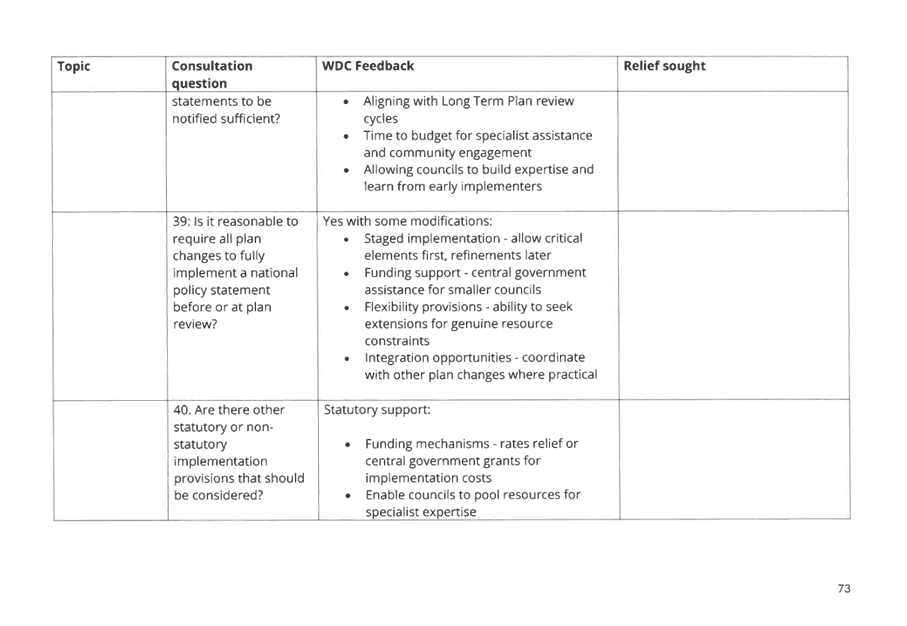
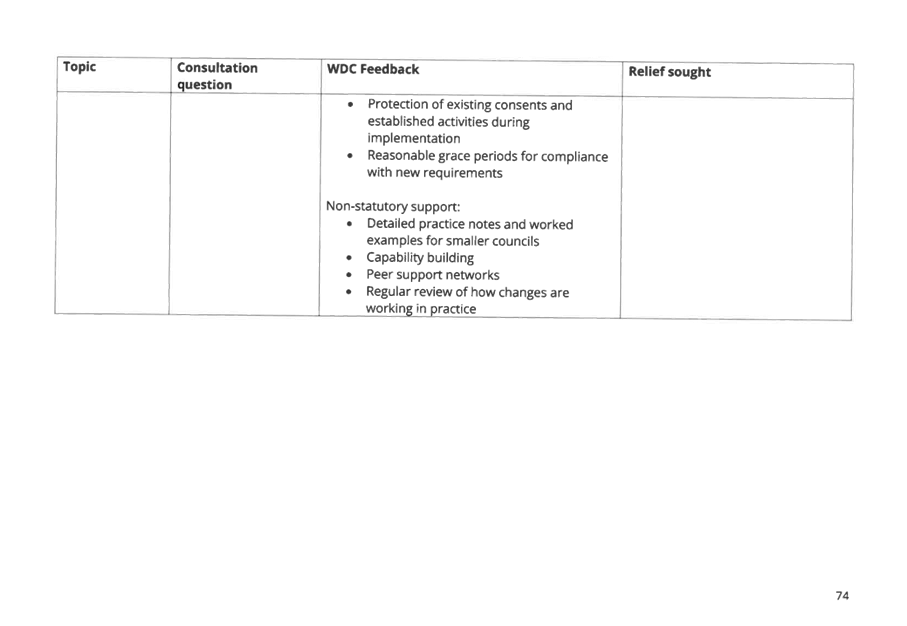
Amendment Bill, as well as the Resource Management - National Direction
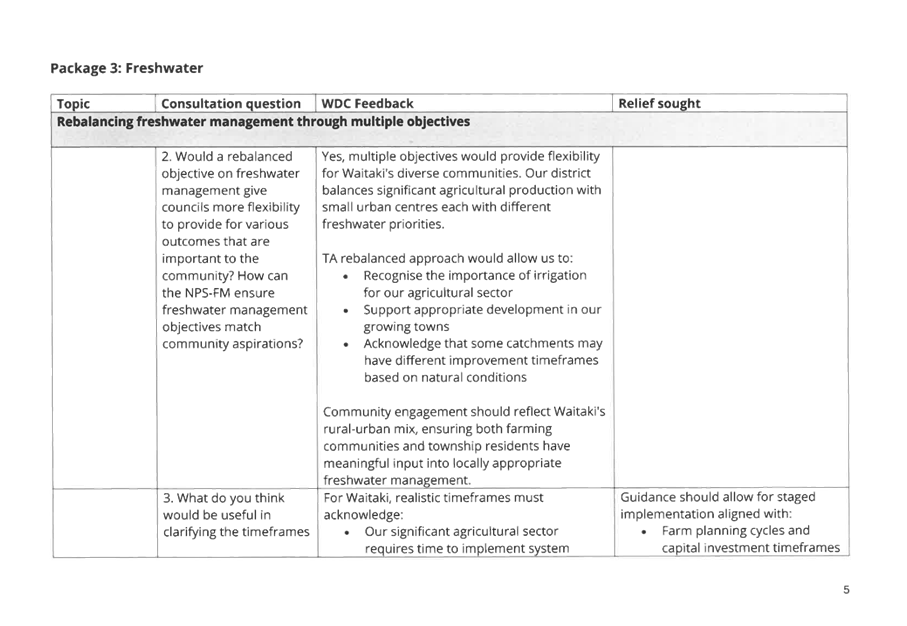
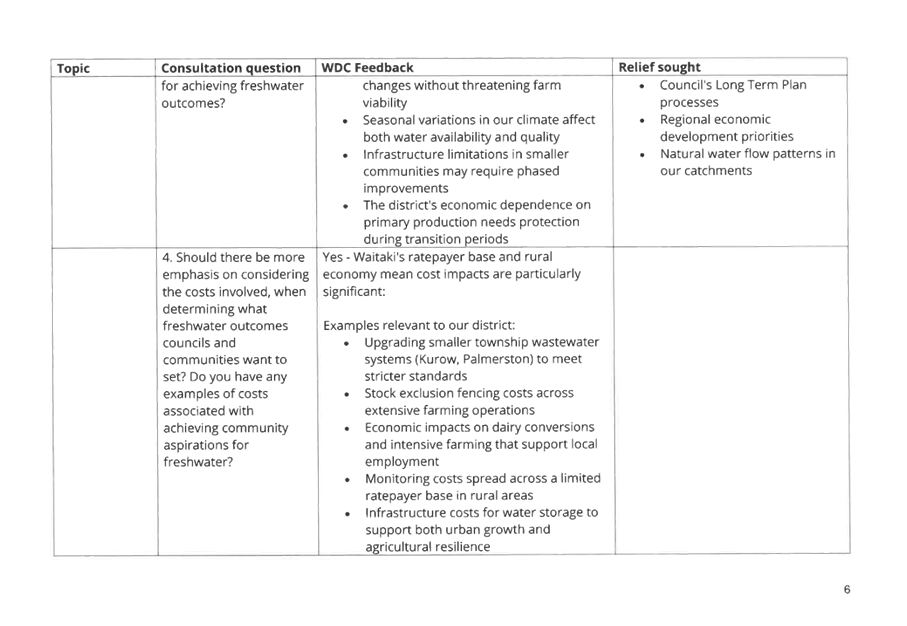
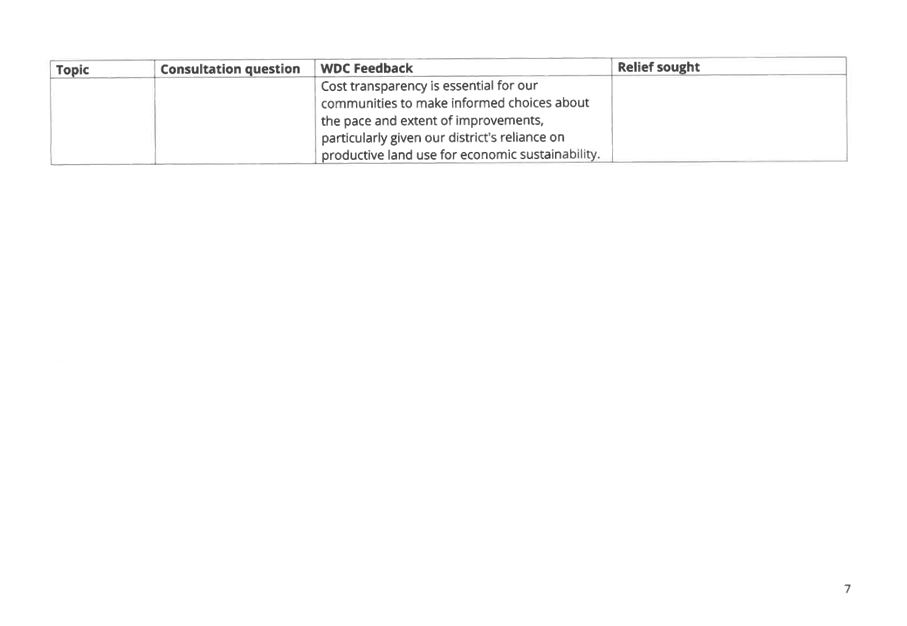
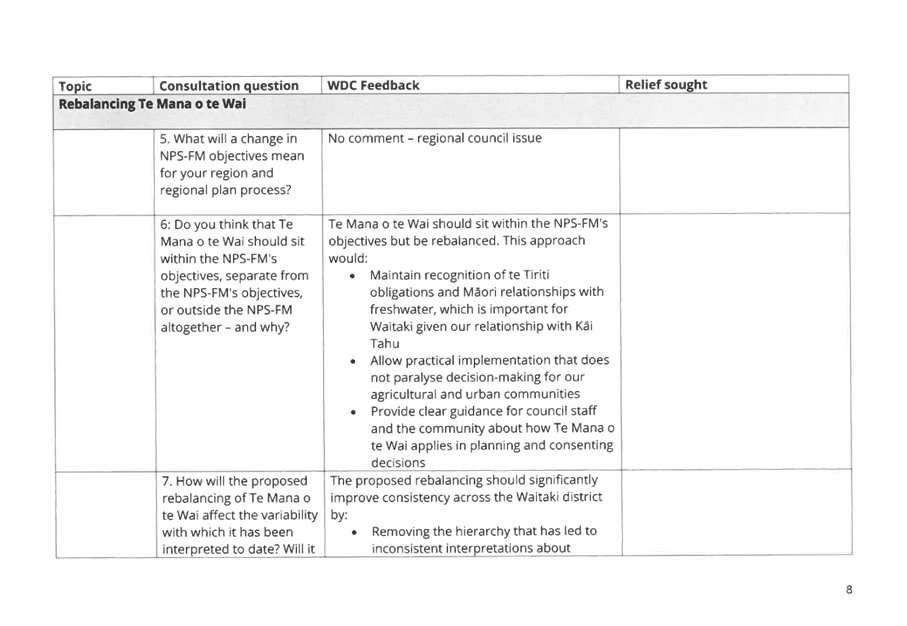
Packages 1-3, which focused on infrastructure and development, the primary
sector, and freshwater, along with Package 4, which addressed housing growth.
The Taituara partnership submissions covered topics such as the Regulatory
Standards Bill, the National Infrastructure Plan, and the Resource Management -
Integrated National Direction Packages 1-3.
4. The
OKR team is updating seasonal sports licences to require reporting of player
data from sporting codes, further improving the Council’s ability to
track and promote participation.
|
KPI 2c – Prosperous
District
|
|
Objective:
Develop and enable a thriving district economy, characterised by
sustainable and inclusive growth
|
|
Strategic Framework:
· Attracting new
opportunities
· Supporting local businesses
· Fostering a
diverse and resilient economy
|
|
Key Results: (series of results that will enable
successful delivery of the
objective)
1. Support and grow the district’s primary
sector

2.Revitalise our places (CBD and townships) through
opportunities to support businesses, homes,
and visitors
3. Increase visitor
economy return
4. Enhance business innovation and
growth
5. Increase the skills base available to employers in the district and improve opportunities within
the district for skills development
|
Key Measures: (initial measures, but not limited to
these measures)
· By facilitating at
least two new feasibility studies
by the end of the financial year to
enable land and water use optimisation and
supporting innovation and secondary industry opportunities
· By activating 50%
of CBD vacant spaces by the
end of the financial year
(excludes Palmerston CBD); AND By measuring the resulting
economic impact by December 2025.
· By generating >15%
increase in overall annual visitor spend through increased overnight stays
· By supporting a
minimum of 10 startups to become established through an
entrepreneurship ecosystem
· By creating career
pathways for at least 50 people into employment
across diverse business sectors
|
Progress
Update:
1. The
Waitaki Grown initiative, a collaboration between the Waitaki District Council
and local farmers, aimed to encourage land use diversification and boost
economic resilience by developing new crops and accessing high-value markets.
The first harvest of medicinal crop trials has yielded promising phytochemical
results from four root crops: Astragalus, Baical Skullcap, Liquorice, and
Withania (Ashwagandha).
These initial results demonstrate
the potential for cultivating high-value medicinal plants in the Waitaki
region. The findings, obtained through laboratory testing, will help the
project team refine cultivation strategies in the coming year.
Waitaki Grown is
exploring future research partnerships, including applications in animal health
and soil wellbeing. These efforts align with a broader vision for integrated
land use systems that promote both environmental and economic sustainability
across the district.
2. The Revitalise our
Places Ōamaru (ROPO) programme concluded in December 2024, leading to two
businesses arranging short-term leases for vacant Thames Street spaces.
Community projects from the Central Ōamaru Masterplan are progressing.
Thames Street facade renovations began in May as stage one, with stage two
planned for Spring 2025. Several placemaking initiatives were finished this
quarter, including the adoption of the Ōamaru North Masterplan. A new
Waitaki identity and story has been developed to boost reputation and community
pride, and new Gateway and Township signage will be the first visible step in
this initiative.
3. Tourism
in the Waitaki District saw mixed results over the last year. Expenditure grew
6.3% to $202 million by September 2024, outpacing Otago and national rates.
Guest nights jumped 11.4%, totalling 467,700. By December, expenditure growth
eased to 2.5% ($204 million), trailing regional and national averages, though
international spending surged 20.7% from a low base. Guest nights kept rising,
up 7.6% to 475,600. However, by March 2025, tourism spending fell 2.4% to $204
million. April data showed renewed growth, with international spend up 19.3%
year-on-year, despite making up only 7% of the total. Guest nights edged up
0.9% to 471,100, bucking declines elsewhere. Overall, while spending
fluctuated, rising guest nights and strong international growth point to a
resilient Waitaki tourism sector.
4. This workstream is on hold due to resource constraints.
5. A dedicated Mayors
Task Force for Jobs Officer has now been appointed to oversee the development
of a new, in-house delivery model for the 2025/26 financial year. In terms of
building capability, nine students have begun their studies toward a Bachelor of
Applied Management through Capable NZ.
|
KPI 2d – Valued
Environment
|
|
Objective:
Protect Waitaki’s natural
and built environment for present and future generations
|
|
Strategic Framework:
• Protecting our diverse landscapes and water bodies
• Meeting Environmental and climate change challenges
|
|
Key Results: (series of results that will enable successful delivery of the objective)
1.Provide leadership
to support sustainable long-term community resilience.
2. Enable
environmental ownership and protection in the community through
education, incentives, and collaboration.
3. Establish and implement robust strategies that promote
the long-term protection and
sustainability of Waitaki’s natural
and built environment.
|
Key Measures: (initial measures, but not limited to
these measures)
· By implementing a minimum of eight climate sustainability and/or resilience projects
· 100% allocation of
the Heritage, Biodiversity, and
Waste Minimisation Funds
· Ensuring
WDC achieves all national legislative planning standards by the end of the year
|
Progress
Update:
1. The Council remains
actively engaged in collaborative meetings with the Otago Climate Officers
Group (OCOG) and the Canterbury Climate Partnership Plan (CCPP), where we
consistently share and provide relevant information to support the objectives
of these partneships.
2. A significant portion
of the Biodiversity and Heritage funds—about 50-60%—has already
been allocated, with a new funding round set for February 2025. The 2024 Waste
Minimisation Fund was fully distributed in August 2024, supporting initiatives
such as a Construction and Demolition waste tradie breakfast, regional webinar,
and the Repair Cafe. Waste staff aided in diverting food waste from a Netflix
film shoot, and the Waste Free Waitaki social media continues to promote waste
minimisation. The Enviroschools kaupapa remains active in fostering youth
sustainability efforts. Recent highlights include a Biodiversity Hui that drew
around 40 participants and strong demand for the Waitaki Biodiversity Fund,
which received three applications totalling more than twice the remaining
annual budget. Additionally, the Waitaki Heritage Fund Sub-Committee awarded
$13,753 to three successful applicants in June 2025, representing 14% of the
fund due to low application numbers.
3. The
Proposed Waitaki District Plan was notified for public consultation on 1 March
2025, with the submission period closing on 16 May 2025. During this time, a
total of 314 submissions were received from the community. These submissions
have now been recorded in a dedicated database, and a comprehensive summary is
currently being prepared. Subject to Council direction in light of the
government’s Plan Stop announcement and proposed legislation, and the
result of any exemption requests made to the Minister, hearings on selected
topics are anticipated to commence in late 2025 or early 2026.
KPI 3 – LEADERSHIP
|
KPI – Overarching
Leadership
|
|
Objective:
As the employee of the Governance Team, lead the staff of Council to achieve other
key initiatives in the
Strategic Framework and programme of priorities.
|
|
Strategic Framework:
• Prosperous District
• Strong Communities
• Quality Services
• Valued Environment
|
|
Key
ACTIONS: (series of ACTIONS
that will enable successful
delivery of the objective)
1.Plan
developed and executed for the next stage of the Economic Development Strategy
2.
Development and implementation of a Communications and Community Engagement Strategy
and approach
3.Delivery of a new Waitaki Sports and Events Centre that meets the “must have” requirements
4.A strong partnership exists between the Council and iwi
based on trust, understanding and shared aspirations; Council
is fulfilling the Te Tiriti
commitments
5. Successful adoption of a fit for purpose, transformative, Long-Term Plan that sets a
direction for the district and its
communities and a focus for what and how
the Council will deliver to
support this
6. As part of the
LTP, review CCOs and progress new arrangements to support delivery of Council
target outcomes and objectives.
7. Development of a
Water Services Delivery Plan and Partnership Development for waters with
other councils
|
Key Measures: (initial measures, but not limited to
these measures)
It is not appropriate to
have measures for this KPI as it is identified as an
overarching leadership objective for the Chief Executive.
The development and implementation of each of the Key Actions in the left column will be the deliverables in this
case.
|
Progress Update:
1. Following
the direction from the LTP process where this matter was consulted on again, a
plan to repurpose Tourism Waitaki as an Economic Development Agency will be
developed and brought back to Council. It is proposed to engage Tourism Waitaki
in this process.
2. Following the Council’s
adoption of the Communications and Engagement Strategy 2025–28 in July,
implementation is now underway. Initial priorities have centred on enhancing
internal capability, including the development of a new Communications Toolkit
for staff. The phased introduction of the new Council brand has also commenced.
Concurrently, work continues on establishing a Community Engagement Framework
to promote more consistent and inclusive engagement across Council initiatives.
Preliminary feedback has been favourable, with staff noting greater clarity and
confidence in communication planning.
3. The construction work is progressing well being on time and on
budget. The roof cladding, pouring concrete for floor slab in cricket area,
blockwork installation is complete, and the installation of internal wall
electrical and IT cables has commenced. Planned works include external wall
cladding installed, completion of cabling with commencement of interior wall
linings installation.
4. Te Rūnanga o Moeraki have recently
appointed a new Chief Executive, and discussions are progressing the further
development of the partnership between Council and TROM and where this can
bring benefits to our communities.
5. The 2025-34 LTP was adopted by Council on 30 June 2025.
The LTP document has been updated to align with the new
organisational structure, reducing its length from 500 pages to 200 pages to
improve readability. Following adoption, Council decided to retain water
services delivery in-house rather than joining a joint CCO. Consideration is
now being given to the preparing an amendment to the 2025-34 LTP, which would
update the plan to reflect the proposed water services delivery model and set
the path for an in-house business unit.
6. The Water Services
Delivery Plan is moving forward for in-house delivery, with a draft submitted
to the Government Department of Internal Affairs on 31 July.
PROGRESS WITH OTHER
KEY WORK
In summary, other areas on which the Chief Executive continues
to engage are:
· Regular meetings
with Council Controlled Organisation Chief Executives and Boards.
· Regular meetings
with other Waitaki Chief Executives.
· Otago Chief
Executives Forum, for which the CE is currently the Chair.
· Otago Mayoral
Forum.
· Otago Civil
Defence Executive Group.
· Otago Civil
Defence Joint Committee.
· Canterbury Chief
Executives Forum.
· Canterbury Mayoral
Forum.
· Waitaki Events
Centre Project Board meetings.
|
Council
Meeting Agenda
|
26 August 2025
|

|
Council
Meeting Agenda
|
26 August 2025
|
6 Recommendations
from Committees Reports
6.1 Recommendations
of the Performance, Audit and Risk Committee Meeting held on 29 July 2025
Author: Arlene
Goss, Governance Services Lead
Authoriser:
|
Recommendation
That Council:
1. Adopts a Treasury Strategy
for the first quarter of the 2025-26 financial year which includes:
a) Monitoring available cash and
projecting future cash requirements
b) Liaising with the Local
Government funding Agency (LGFA) to ensure Council’s ability to
function and deliver on behalf of its communities is not impeded by lack of
funds
c) Obtaining advice and support from
Bancorp Treasury Services on key projects in addition to ensuring compliance
with policy limits
d) Investing funds considered
surplus to immediate requirements based on current forecasts to best
advantage to maximise returns.
|
|
1.
Minutes
of PAR Meeting - Treasury Strategy, FY 2025-2026 First Quarter
|
|
The circulated report discussed
Council’s proposed Treasury Strategy for the first quarter of the
2025-26 financial year, reviewed the benefits arising from Council’s
membership of the Local Government Funding Agency (LGFA), and considered the
recommendations put forward by officers.
Chief Financial Officer Amanda Nicholls
spoke to the report, noting it proposed continuing the same approach to the
Treasury Strategy as previous quarters, aiming to maximise investment returns
while keeping borrowing costs low. Ms Nicholls then responded to questions
from committee members.
There was discussion regarding whether
some of the funds sitting in Council’s call account could be placed in
a term deposit with higher yield. It was explained that the fund balances in
the call account were kept as low as practical and only forecast to be there
for a short-term period.
It was noted by the Chair that the report
didn’t accurately reflect the current market situation, as the OCR has
been consistently decreasing since 2023, not only for the past six months as
stated in the report. It was noted that the reference in the report to
increased borrowing costs due to changes to the OCR over the past two years
was therefore incorrect.
It was also noted that the future
borrowing forecasts for the next nine years as presented in the report did
not include water services capital expenditure. Following Council’s
decision regarding Southern Water Done Well, the forecasts are being reworked
to include water services capital expenditure.
It was acknowledged work would need to be
done to update the Treasury Strategy in light of reworked future borrowing
forecasts, including reviewing the pros and cons of getting a credit rating
and analysing borrowing limits and debt ratios. This would involve working
with Bancorp.
It was suggested that Bancorp be invited
to attend the next Council workshop on the Council’s Water Services
Delivery Plan.
|
|
Resolved PAR 2025/001
Moved: Member Jim Hopkins
Seconded: Deputy
Mayor Hana Halalele
That the Performance,
Audit and Risk Committee recommends:
That Council:
1. Adopts a Treasury Strategy
for the first quarter of the 2025-26 financial year which includes:
a) Monitoring available cash and
projecting future cash requirements
b) Liaising with the Local
Government funding Agency (LGFA) to ensure Council’s ability to
function and deliver on behalf of its communities is not impeded by lack of
funds
c) Obtaining advice and support from
Bancorp Treasury Services on key projects in addition to ensuring compliance
with policy limits
d) Investing funds considered
surplus to immediate requirements based on current forecasts to best
advantage to maximise returns.
Carried
|
|
Council
Meeting Agenda
|
26 August 2025
|
7 Decision
Reports
7.1 Local
Water Done Well Water Services Delivery Plan Model Confirmation and Adoption
Author: Paul
Hope, Director Support Services
Recommender: Paul
Hope, Director Support Services
Authoriser: Alex
Parmley, Chief Executive
attachment: The Waitaki District Council Water
Services Plan will be circulated separately to this agenda and will also be
posted on the council website before the meeting.
Purpose
The
purpose of this
report is to present several recommendations in relation to the Waitaki
District Council Water Services Delivery Plan (WSDP) to allow the submission of
the (WSDP) to the Department of Internal Affairs (DIA) by the statutory
deadline of 3 September, 2025.
The WSDP reflects the decision made
on 8 July 2025 to adopt an In-house approach as the preferred water service
delivery model. There are also three matters that have been discussed in public
workshops that now require decisions. It also seeks approval of the attached
WSDP, with amendments as required, for certification by the Waitaki District
Council Chief Executive and submission to the Department of Internal Affairs by
3 September 2025.
executive
summary
Council has considered matters in
relation to the Local Water Done Well water reforms on numerous
occasions. The most recent consideration was on 8 July 2025 when the
decision was to undertake future water service delivery In-house. Since
then, additional work has been undertaken to allow the development of a WSDP
that reflects that decision. The results of this work have been presented
in five public workshops. The WDSP presented at this meeting reflect the discussions that
took place in these workshops.
|
OFFICER
Recommendation
That Council:
1. Approves
the following changes to information previously considered to be included in
the Water Services Delivery Plan:
a) Additional
budgeted expenditure of $9,790,000 to address compliance issues identified in
the WSDP development process.
b) Additional
expenditure of $9,450,000 to address resilience and renewal issues identified
in the WSDP development process.
c) To
increase charges in an approach to achieve a balanced budget and revenue
sufficiency to meet operational, investment and borrowing costs.
2. Approves
the Water Services Delivery Plan, subject to any adjustments required by the
above decisions, set out in Attachment 1 for submission to the Department of
Internal Affairs by 3 September 2025 for acceptance.
3. Notes
that in accordance with section 18 of the Local Government (Water Services
Preliminary Arrangements) Act 2024, the Chief Executive must provide
certification to the Department of Internal Affairs in respect of the
information provided by Waitaki District Council that the Water Services
Delivery Plan complies with the Local Government (Water Services Preliminary
Arrangements) Act 2024 and that the information contained in the plan is true
and accurate.
4. Delegates
to the Chief Executive the authority to finalise the plan including making
minor amendments to the Water Services Delivery Plan (if required) in advance
of submission to the Department of Internal Affairs.
5. Notes the willingness of the
Council to explore future opportunities for collaboration with other Councils
in relation to water services delivery.
|
context, analysis and advice
Background and Current Situation
Under the Government’s Local Water Done Well
Legislation Councils are required to assess and agree a preferred water
services delivery model that is financially sustainable, meets government
regulatory standards, and supports long-term community outcomes. Councils must
identify and evaluate options, select a preferred option, consult with their
community, consider feedback alongside technical and financial analysis, and
decide on the option to adopt for the future delivery of water services. Councils
must prepare and adopt a WSDP, which outlines how the chosen model will deliver
compliant and sustainable water services, before submitting it to the DIA for
review and acceptance. If accepted the Council is legally bound to deliver the
plan. The DIA will apply the following three tests in the assessment of the
WSDP and whether the Council’s water services delivery is financially
sustainable:
• Revenue sufficiency –
is there sufficient revenue to cover water services delivery costs,
including servicing debt
• Investment sufficiency
– is the projected level of investment sufficient to meet regulatory
requirements and provide for growth
• Financing sufficiency –
are funding and finance arrangements sufficient to meet investment
Requirements
In March 2025, Waitaki District
Council joined with Gore, Clutha and Central Otago District Councils to form
Southern Water Done Well (SWDW), to investigate water services delivery options
that meet the legislative requirements of Local Water Done Well. A joint CCO
with these councils was the preferred option, and was further investigated
along with an In-house, stand-alone CCO and CCO with Waimate, Timaru and
Mackenzie District Councils that were presented to the community as part of the
required LWDW consultation.
The results of the consultation were
considered at a meeting on 8 July 2025, and the following was resolved:
|
RESOLVED WDC
2025/001
Moved: Cr Tim Blackler
Seconded: Cr
Courtney Linwood
That Council:
1. Agrees
to adopt an enhanced in-house water services delivery unit for a minimum of
two years as the Council’s model for the delivery of water services in
accordance with section 13(1)(k) of the Local Government (Water Services
Preliminary Arrangements) Act 2024.
|
|
2. Requests
staff to prepare a Water Services Delivery Plan that complies with matters
set out in section 13 of the Local Government (Water Services Preliminary
Arrangements) Act 2024 and the Council’s chosen proposed water services
delivery model, to be brought back to Council for consideration, approval and
certification by the Waitaki District Council Chief Executive prior to being
submitted to the Department of Internal Affairs by 3 September 2025 for
acceptance.
|
|
3. Will
exercise its right to exit the joint arrangement with Central Otago, Clutha
and Gore under the current commitment agreement.
|
|
4. Agrees
to further discuss details surrounding the future management of water at
another time and requests staff to prepare an outline with input from Elected
Members for a workshop to that effect. For clarity, this future discussion is
to explore key issues or themes raised through the consultation and
investigation to date. It would also include looking at the various models
adopted by other councils and highlighting matters for further investigation
and focus - including exploring the feasibility of a future shared
services/Joint CCO approach with South Canterbury Councils.
|
|
5. Notes
the public submissions received and thanks all submitters for their feedback.
|
|
The Mayor then moved a further motion as below and it was seconded by
Cr Hopkins. He gave his reasons for adding this to the list of
resolutions, which included the need to get a better understanding of the
complexity and challenges.
|
|
RESOLVED WDC 2025/002
Moved: Mayor Gary
Kircher
Seconded: Cr
Jim Hopkins
That Council instructs staff to
provide clarity to the community and regular updates as immediately as
possible, on how much more the in-house options will cost them over the joint
Southern Group CCO, according to the most up-to-date modelling available.
Carried
|
As a consequence of the above, the
remaining SWDW Councils were advised of the decision, and a formal withdrawal
notice has been supplied. This has been accepted. It should be
noted that all three Councils have resolved that Waitaki DC can rejoin the
grouping later if it so desired.
This report seeks to address the
matters set out in other matters covered in these resolutions.
Analysis and Discussion
Officers and various advisors,
principally Morrison Low Advisory, have undertaken additional work and analysis
to prepare a WSDP based on an In-house delivery approach. This work also
considered feedback from the Department of Internal Affairs (DIA) on a draft
WSDP they requested Council to supply. This additional work and other issues
have been presented to Council and the community in a series of public
workshops held on 22, 29 July and 5, 12 and 19 August.
During this process two key matters
were identified where it was considered that modification is needed to be made
to the information contained in the consultation material and subsequently
presented in the draft WSDP.
Additional Expenditure
As a result of considering the feedback from the DIA it has
been determined that bringing forward items previously deferred would address
more directly the compliance matters raised by the DIA to ensure that the plan
passes the investment sufficiency test. It is therefore recommended that
the following items that were presented at the 19 August 2025 workshop be added
in to the WSDP.
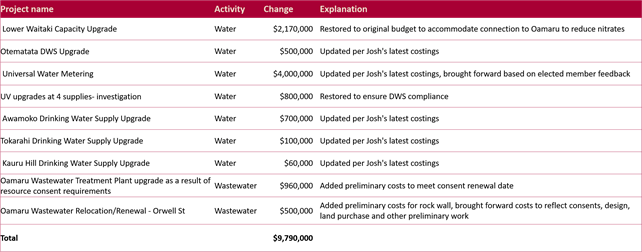
In addition to these compliance
related matters, there were another group of deferred projects that addressed
renewal and resilience issues identified by the DIA, again to ensure the plan
passes the investment sufficiency test. It is recommended that these also
be included in the WDSP.
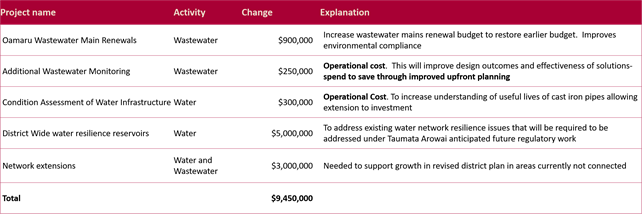
Amended Revenue Flows (smoothing)
Another matter discussed at the 19 August workshop was ways
to address the concerns about the level of increased charges in the 2028
financial year. Scenarios were presented showing how a graduated approach could
be used and the impact of this approach. The primary impacts of this
change would be to have an impact on debt levels and charges, particularly in
the later years. However, the impact of smoothing, whilst graduating
increases, does not overall reduce the increase required. In addition, the
smoothing of charges could have a detrimental impact on the Council’s
ability to secure a necessary credit rating as it places waters and the Council
in a position of not having a balanced budget going forward. For this reason,
smoothing in charge / rate increases is not recommended.
Other Matters - Additional Workshop
Discussions
Other matters were considered in more
detail following the 8 July decisions. These primarily focused on the
impact on Council as a whole with water services being delivered
in-house. These discussions included the availability of debt and funding
for other services, project deliverability and potential services level
changes. The need to amend the Long-Term Plan were also discussed.
These matters will be addressed in future reports and are therefore not
directly addressed in the decisions covered in this report.
Others Matters – South
Canterbury Councils and SWDW Councils Decisions
At the time of producing this report
there is no proposal that has been developed for the three South Canterbury
Councils to work together on water services matters. The current approach
of the three councils is:
· Timaru DC– Consulted on a stand-alone CCO as
their preferred approach. Considered making a request to join SWDW at an
emergency Council meeting on 12 August but no decision was made. Yet to
approve a WSDP.
· Mackenzie DC– Consulted on a stand-alone CCO as
their preferred approach however selected the option for an In-house model at a
meeting 0n 15 July. Considering a draft WSDP on 19 August.
· Waimate DC – Consulted on an in-house option as
their preferred approach. Confirmed as the preferred approach on 1
July. Considering a WSDP at a meeting on 19 August.
The three remaining SWDW Council have
all approved the joint WSDP for submission to the DIA. In addition to
approving the WSDP all three resolved to allow Timaru and Waitaki to join SWDW
if they so desired. No action has been taken on this.
Updated Water Services Delivery Plan
The attached WSDP has been prepared based on the information
previously received by Council and the attached and further analysis prepared
by Morrison Low in response to the Council resolution on 8 July 2025. The
attached WSDP has been written to satisfy the requirements of the Local
Government (Water Services Preliminary Arrangements) Act 2024 and as set out in
the DIA templated guidance. The WSDP has been reviewed by Council staff to
ensure legislative compliance. DIA have also provided initial feedback on the
WSDP, including a financial sustainability assessment and compliance with the
legislative requirements set out in section 13 of the Local Government (Water
Services Preliminary Arrangements) Act 2024. The DIA provided an initial review
of the WSDP on 11 August 2025. The draft plan has been updated to address
matters raised in the feedback and is considered to meet the requirements of
section 13 and 14 of the Local Government (Water Services Preliminary
Arrangements) Act 2024.
Financial Considerations
The financial implications for ratepayers and impact on
overall Council debt are included within the WSDP
Risks
The risks presented to Council in July 2025 have been
reviewed based on the further analysis by Morrison Low and matters presented in
this report. Overall, there has been no material change in either nature of the
risk or its potential impact.
|
Risk
|
Impacts
|
|
WSDP
is not submitted by 3 September 25 statutory deadline
|
• Reputation risk for Councils
• Potential DIA intervention with associated loss of
decision-making control
|
|
DIA
does not approve the WSDP and requires the document to be revised.
|
• DIA requires the group of Councils to alter the
WSDP
• DIA requires the group of Councils to
change the operating model design
• DIA requires other Councils to join the group of
Councils before the WSDP is accepted and appoints a Crown Facilitator or
Water Services Specialist
|
|
Ratepayers do not appreciate the impending costs increases
for 3 Waters Services – irrespective of the delivery model adopted
|
• Increasing affordability issue for larger group of
ratepayers
• Negative publicity and reputation risk for
Councils
|
|
Transition planning may reveal that actual transition costs
are greater than forecast given the level of analysis to date as it was not
the preferred option
|
• Potential increase in project budget
• The transition approach may require revision.
|
|
Council does not secure a credit rating to allow an
increase in borrowing limits
|
• Inability to implement WSDP creating regulatory
compliance issues
• Increasing affordability issue for larger group of
ratepayers
• Negative publicity and reputation risk for
Councils
|
|
Changes to legislation through Bill 3 may
require additional resource
commitments and amendments to
arrangements.
|
• Cost and time associated with rework
• Potential increase in project budget
• Additional council resource commitments
|
Significance
and Engagement
This decision is of high significance in accordance with the
Council’s Significance and Engagement Policy due to the financial,
operational and governance implications for Council and the
community. The decision will shape Council’s approach to
water service delivery for the next decade and beyond.
Summary of
Options Considered
Assessment of Preferred Option
The following table provides an update of the advantages and
disadvantages of each option presented in the recommendations of this report.
Options Analysis – Adopt Water Services Delivery Plan
|
Options
|
Advantages
|
Disadvantages
|
|
Council adopts the Water Services Delivery Plan attached as
attachment 1 to be submitted to the Department of Internal Affairs by 3
September 2025.
Council does not adopt the Water Services Delivery
Plan attached as attachment 1 to be submitted to the Department of Internal
Affairs by 3 September 2025.
|
• The attached WSDP is informed by updated (and
previous) analysis which notes
ratepayers of the three SWDW Councils will be financially better off through
the establishment of a Southern WSE. Initial financial analysis also shows
the benefits of the inclusion of additional councils.
• Takes account of the DIA
assessment
on 21 July 2025 that a jointly owned CCO is likely the only viable option to
meet the legislated financial
sustainability
requirements.
• Consistent with Council’s
decision
on 8 July 2025.
• Meets the legislative deadline for the submission
of the WSDP to DIA by 3 September 2025.
• No advantages identified.
|
• No disadvantages identified
• The attached WSDP will not be submitted to DIA.
• Insufficient time to prepare an alternative WSDP to
meet DIA deadline of 3 September 2025.
• Highly likely tom result in actions by the DIA
under Subpart 2 of the Local Government (Water
Services Preliminary Arrangements) Act 2024
including appointment of a Crown Facilitator or Water
Services Specialist.
|
|
Council authorises the Chief Executive to make minor
amendments to the Water Services Delivery
Plan (if required) in advance of submission to the
Department of Internal Affairs.
Council does not authorise the Chief Executive, in
conjunction with the Chief Executives of to make minor
amendments to the Water Services Delivery Plan (if
required) in advance of submission to the Department of Internal
Affairs.
|
• Allows minor amendments to be addressed by the
Chief
Executive(s) without having to reconvene Council.
• Council has visibility overall all minor amendments
to the WSDP.
• No advantages identified.
|
• No disadvantages
identified.
• Slow timelines to finalise and submit the
WSDP.
• Creates risk of not meeting the DIA deadline by 3
September 2025.
• Will require additional
Council
decision making and meetings to agree even minor amendments to the Commitment
Agreement.
|
Linkage to Strategic Plan Priorities
Councils must revisit and most likely formally amend the
Long-Term Plans (LTP) and associated supporting strategies (including Financial
& Asset Management Strategies), to reflect the water service delivery
adopted and that it complies with Local Water Done Well legislation
requirements. This will need to be undertaken in FY 26/27.
Next Steps
The circulated WSDP will, subject to any minor amendments, be
prepared for submission to the DIA by 3 September 2025.
The Chief Executives will certify that the WSDP meets the
requirements of the Local Government (Water Services Preliminary Arrangements)
Act 2024 (including financial sustainability requirements) and that the
information provided by its Council is true and accurate, in advance of
submission.
•
Progress the development of a detailed implementation plan beyond that included
in WSDP, including the identification and securing of resources to support the
transition and implementation phase.
• Further updates
on the transition plan and other matters associated with the implementation of
the WSDP and associated impacts on Council as a whole will be brought back to
the Council for approval.
|
Council
Meeting Agenda
|
26 August 2025
|
7.2 Notice of
Motion - Establishment of Local Water Done Well Independent Advisory Group
Author: Arlene
Goss, Governance Services Lead
Authoriser: Paul
Hope, Director Support Services
Attachments: 1. EXTRACT
from Waitaki District Council Standing Orders - Notices of Motion Clause 27 ⇩ 
2. Motion
from Cr Blackler - Advisory Group Proposal ⇩
|
Recommendation
That Council:
1. Formally
receives the Notice of Motion on the topic of “Establishment of Local
Water Done Well Independent Advisory Group” which was emailed to the
Chief Executive from Cr Tim Blackler on Monday 18 August, 2025, and which has
been accepted by the Chief Executive for consideration at this meeting
pursuant to Clause 27 of Waitaki District Council Standing Orders.
|
Purpose
The Chief Executive has received a Notice of Motion from Cr
Tim Blackler, with the request that it be placed on the agenda for the 26
August 2025 Council Meeting.
The purpose of this report is to include that Notice of
Motion in the agenda papers for this meeting as requested by the author, and to
provide the opportunity for Cr Blackler, with the Mayor and other Councillors,
to speak to the Notice of Motion, for officers to be able to respond to the
Notice of Motion, and for Council to consider and agree an appropriate
response.
Summary
Notices of Motion are required to meet the requirements set
out in Clause 27 of the Waitaki District Council Standing orders. A copy
of Clause 27 is included as an attachment.
Cr Blackler’s Notice of Motion, as submitted, fully
meets the requirements of Clause 27 of Standing Orders. It was sent to
the Chief Executive via email and included Cr Blackler’s electronic
signature as the mover. It was delivered to the Chief Executive more than
five clear working days before this meeting.
Pursuant to the final paragraph in Clause 27.1, the Chief
Executive, through this agenda report, is giving the Mayor and Councillors
notice in writing that he has received the Notice of Motion from Cr Blackler on
the topic of “Establishment of Local Water Done Well Independent Advisory
Gorup” that was emailed to him.
|
Council
Meeting Agenda
|
26 August 2025
|
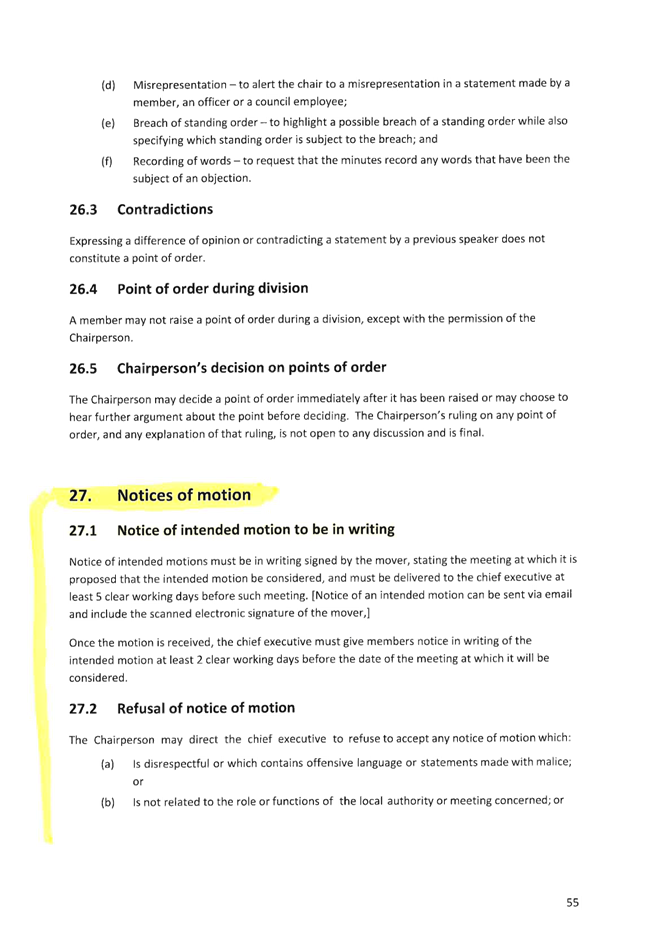
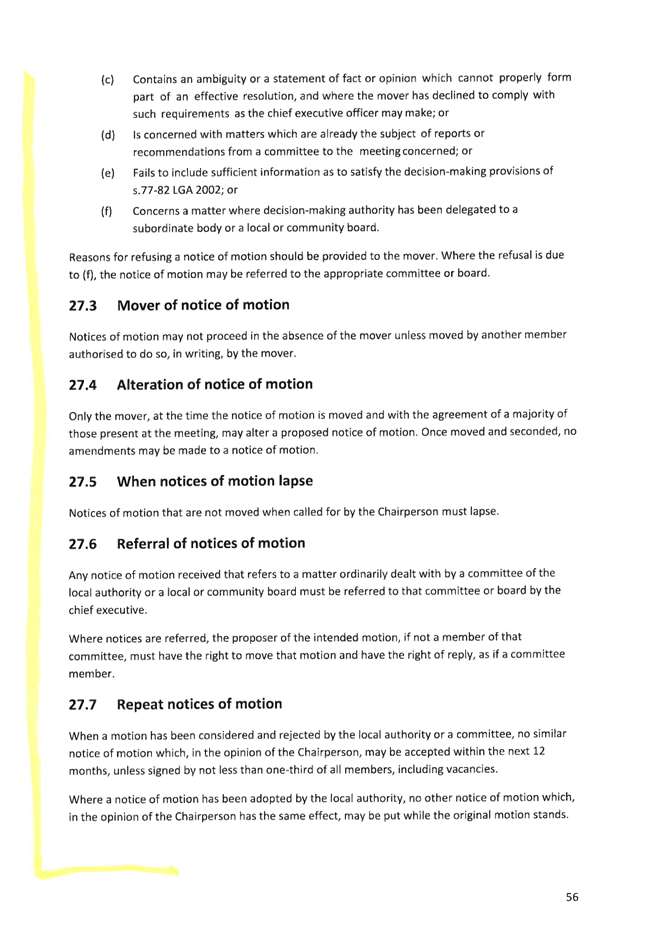
|
Council
Meeting Agenda
|
26 August 2025
|
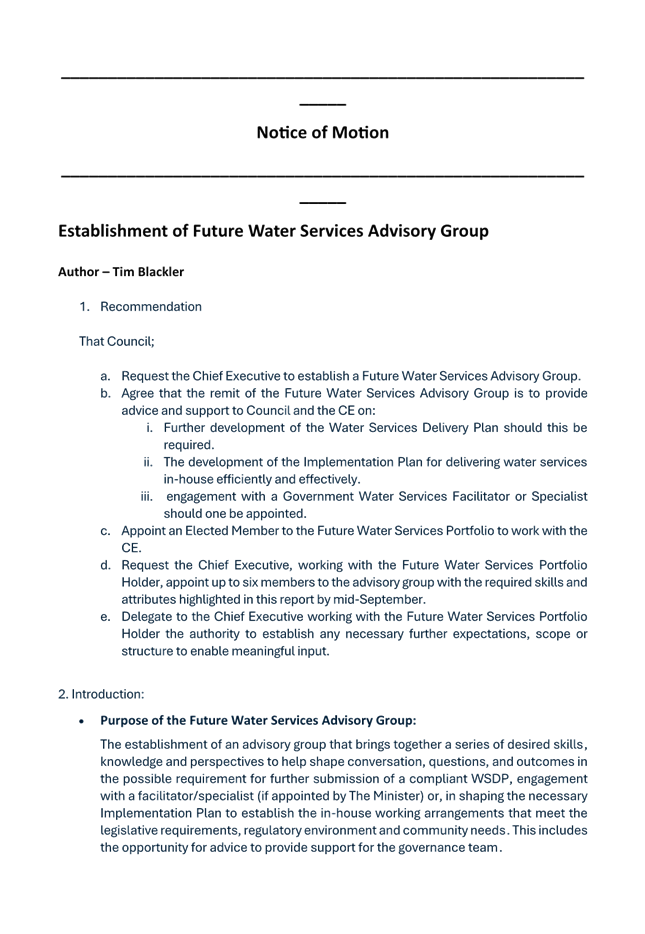
|
Council
Meeting Agenda
|
26 August 2025
|
7.3 Revocation
of Reserve and Gifting of land
Author: Rachel
McNeill, Property Officer
Authoriser: Joanne
O'Neill, Director Strategy, Performance, and Design
Attachments: 1. Section
1 SO 605185 ⇩
|
Recommendation
That Council:
1. Approve
pursuant to section 24(1) of the Reserves Act 1977 that the Local Purpose
Reserve classification over the land on the corner of Gordon Street and
Wynyard Street, Kurow, Section 1 SO 605185 is revoked and the land to remain
vested in Council in a fee simple estate on the basis the site is no longer
needed for reserve purposes due to change in community needs.
2. Approve
the land being declared as surplus land.
3. Approve
the land being gifted to Waitaki Valley Health Trust on the following basis:
a) The
sale is subject to the reserves revocation process being completed as
required under the Reserves Act 1977;
b) The
agreement requires the removal of improvements from the existing site at 6-10
Wynyard Street, Kurow.
4. Delegate
to the Chief Executive the authority to take such action and sign such
documents as may be reasonably necessary to implements Council’s
resolutions above, and matter ancillary to them.
|
Decision Objective
To seek Council approval to
initiate the statutory process for revoking the reserve status of Section 1 SO
605185, Kurow (corner of Gordon and Wynyard Streets, adjacent to Kurow Memorial
Hall) from local purpose (community buildings) reserve to fee simple title, and
to obtain approval for the subsequent transfer of the property to Waitaki
Valley Health Trust to enable development of a community medical centre
facility.
Summary
The Waitaki Valley Health
Trust has been collaborating with Waitaki District Council to
develop a new medical centre in Kurow. The proposed site
is Council-owned land at the corner of Gordon and Wynyard Streets (Section
1 SO 605185, 3,859 sqm). To support this project, this land was
reclassified from Local Purpose (Passive Recreation) Reserve to Local Purpose
(Community Buildings) Reserve following resolution in Council in September 2023
to facilitate the project. Resource consent for the medical centre development
was granted in 2024.
The Council proposes to gift
the land to the Trust to enable the medical centre’s
construction.
Council considered a lease
agreement as an alternative to gifting the land. However, leasing
could limit the Trust’s ability to secure funding.
Transferring full ownership (fee simple title) gives the Trust
the certainty needed to obtain additional funding for the
project.
A land investigation has confirmed
the subject site’s suitability for reserve revocation and that it is not
Crown-derived (Council holds it in its own right) land. Council now requires
formal approval to proceed with the statutory reserve revocation process and
subsequent land transfer to enable the community medical centre development.
The existing medical
centre at 10 Wynyard Street, also on Council land, is no longer
suitable for future community use. As part of the agreement, the Trust
will remove all buildings and improvements from the current site
at 6–10 Wynyard Street before returning it to Council.
decision-making expectations
|
Governance
Decision-Making:
|
Approve proposal to
revoke local purpose reserve land (Section 1 SO 605185) and vest in Council
as fee simple land to facilitate the development of a medical centre in
Kurow; and agree to gift the subject land to the Wataki Valley Health Trust
for the purpose of the development of a new medical centre.
|
|
Operational Decision-Making:
|
Delegate Chief
Executive to implement Council’s resolution including the associated
statutory process requirements and agreement with the Trust.
|
|
Communications
|
Media Releases –
contributed to by officers and Elected Members
Media/public enquiries
regarding governance decision-making topics above can be addressed by
governance
Media/public enquiries
regarding operational decision-making topics above can be addressed by
officers
|
Summary of Decision-Making Criteria
|
|
No/Moderate/Key
|
|
No/Moderate/Key
|
|
Policy/Plan
|
Moderate
|
Environmental Considerations
|
No
|
|
Legal
|
Moderate
|
Cultural Considerations
|
No
|
|
Significance
|
Moderate
|
Social Considerations
|
No
|
|
Financial Criteria
|
Moderate
|
Economic Considerations
|
No
|
|
Community Views
|
Moderate
|
Community Board Views
|
Moderate
|
|
Consultation
|
Moderate
|
Publicity and Communication
|
No
|
Background
The site of the proposed new
medical centre facility is located on the corner of Gordon and Wynyard Streets,
Kurow (Section 1 SO 605185). The land is Council owned and classified as Local
Purpose (Community Buildings) Reserve with an area of 3,859 sqm as outlined in
attachment 1.
The subject land was previously
classified under the Reserves Act 1977 (Reserves Act) as Local Purpose (Passive
Recreation) Reserve. In 2023, Council resolved to reclassify the subject land
to Local Purpose (Community Buildings) Reserve [Resolution WDC 2023/159].
Council resolved at its 26 September 2023 meeting to make the land available
for the Waitaki Valley Health Trusts community Hub development.
Consultation for a resource consent
under the Resource Management Act to facilitate the development of a new
medical centre on the subject land and reclassification of the reserve land
from Local Purpose (Passive Recreation) Reserve to Local Purpose (Community
Buildings) Reserve was completed in in 2024. No objections were received.
Resource consent was granted to subdivide land into two allotments and to
establish a Community Health & Wellness Hub including associated car
parking areas and emergency helicopter landing area on Lot 1 and storage for
Hazardous Substances as per consent 201/202.2023.2258.
Through consultation on
Council’s Long-Term Plan 2025 – 2034, feedback was received
suggesting a proposal to gift land holdings to Waitaki Valley Health Trust to
provide assets/funding for their project.
Process to divest local
purpose reserve and gift land
The following process is required
to be followed as per the Reserves Act 1977.
· Determine
justification – Confirm the reserve is no longer required for its
original purpose or that divestment serves the public interest.
· Consult
with iwi/mana whenua
· Consult
with the Commissioner
· Public
consultation – Publicly notify the intention to revoke reserve status
and allow for public submissions over the prescribed period.
· Consider
submissions – Review and formally consider all public feedback
received during consultation
· Council
resolution – Pass resolution to revoke reserve status
· Legal
completion – Complete survey requirements and convert land to fee
simple title through LINZ.
· Execute
gift – Transfer ownership to the community group via council
resolution, ensuring compliance with Local Government Act 2002 asset disposal
provisions.
To enable the disposal of the
subject land to the Waitaki Valley Health Trust, Council must revoke the
reserve status of the site in accordance with the Reserves Act. The Trust
requires Council approval prior to any future disposal of the gifted land, Council
must be satisfied that this revocation can be justified on the basis that the
land is no longer required for its original purpose, or due to changing
community needs.
As part of the agreement, it is
anticipated that the trust’s current site at 6-10 Wynyard Street, Kurow
would be cleared of all improvements before being returned to Council.
Discussions with the Trust have confirmed their willingness to accept the land
under these conditions. All costs associated with the revocation of the reserve
status and the transfer of land title are expected to be met by the Trust.
Summary of Options Considered
Option 1 –
Revocation of Reserve and Gifting of Land to Waitaki Valley Health Trust
(preferred option)
|
Advantages
|
Disadvantages
|
Risks
|
|
· Supports development of a
community health and wellness hub in Kurow
· Provides the Trust with a greater
security of tenure, enabling access to funding and long-term planning
· Aligns with community feedback
received during the Long-Term Plan process, adding to the Trust’s
assets
|
· Council permanently loses
ownership of the land
· Potential public concern over
gifting rather than leasing or selling
· Legal and administrative costs
associated with revocation and transfer
· Council loose direct control of
the site regardless of if leased or disposed of
|
· Public or iwi opposition during
consultation phase
· Future disposal of the land by the
Trust without Council oversight (mitigated by condition requiring Council
approval)
· Perception of setting a precedent
for gifting Council land
· Council do not realise the true
monetary value of the land
|
Option 2 –
Status Quo
Retains the reserve status but may hinder development and
funding opportunities for the Trust. Council would progress leasing the site to
the Trust.
|
Advantages
|
Disadvantages
|
Risks
|
|
· Council retains ownership of the
land
|
· May limit the Trust’s
ability to secure funding due to lack of freehold title.
· Creates ongoing administrative and
legal obligations for Council.
· The Trust cannot use the site as
leverage for funding.
|
· The Trust may be unable to proceed
with their project if funding is contingent on land ownership
· Potential delays or complications
negotiating lease terms
|
Assessment of Preferred Option
Proceeding with the revocation of
reserve status and gifting of Section 1 SO 605185 to the Waitaki Valley Health
Trust is considered the most effective and efficient option to support the
Trust’s development. Delaying this decision and opting to lease the site
instead would still require legal input and incur similar costs, without
providing the Trust with the freehold title necessary to secure funding. By
deciding to dispose of the land now, Council can avoid duplicating legal
processes and administrative effort, while enabling the Trust to move forward
with greater certainty and momentum.
Conclusion
The proposed revocation of reserve status and gifting of
Section 1 SO 605185 to the Waitaki Valley Health Trust presents a timely
opportunity to support the development of a community health and wellness hub
in Kurow. While the decision involves the permanent transfer of Council-owned
land, the community benefits—particularly in enabling the Trust to secure
funding and deliver essential health services—are considered to outweigh
potential concerns. The gifting arrangement includes safeguards such as Council
oversight of any future disposal and the return of the Trust’s current
site. Given the low to moderate significance of the proposal under
Council’s Significance and Engagement Policy 2023, and the alignment with
strategic community outcomes, Council is well placed to decide now rather than
proceed with a lease arrangement that may hinder the Trust’s ability to
advance their project.
Additional Decision-Making Considerations
Waitaki District Council Strategic Framework
Outcomes
Community Outcomes
Prosperous District
· Fostering
a diverse and resilient economy
Strong Communities
· Enabling
safe, healthy communities
· Connected,
inclusive communities
Quality Services
· Community
facilities and services we are proud of
Policy
and Plan Considerations
The proposal to gift the land to Waitaki Valley Health Trust
is of low to moderate significance under the Waitaki District Council’s
Significance and Engagement Policy 2023. While the land is not classified as a
strategic asset and the gifting does not substantially alter service levels,
the transfer supports community health outcomes and involves a change in land
ownership. Accordingly, the policy supports a proportionate engagement
approach, including iwi consultation and public notification, to ensure transparency
and community awareness of the decision.
Community
Views
Community view may arise during notification process to
revoke reserve status.
Due to time constraints this report is going directly to
Council. This report will be circulated to Community Board members prior to the
Council meeting.
Financial
Considerations
The main financial implication is the disposal of a Council
asset from the books.
It is proposed that the Trust will cover the following
estimated costs associated with revoking the reserve status and transfer of
land:
· Department of
Conservation – $500 - $1,000
· Property
Consultant - $1,000
· Legal - $3,000
Legal
Considerations
The Council will need to engage
with the Reserves Act 1977 process for revoking a reserve.
Publicity
and Community Considerations
· Iwi consultation
will commence following Council approval.
· Public
notification will be undertaken as required under section 24 of the Reserves
Act 1977
· Submissions may
arise from consultation
|
Council
Meeting Agenda
|
26 August 2025
|
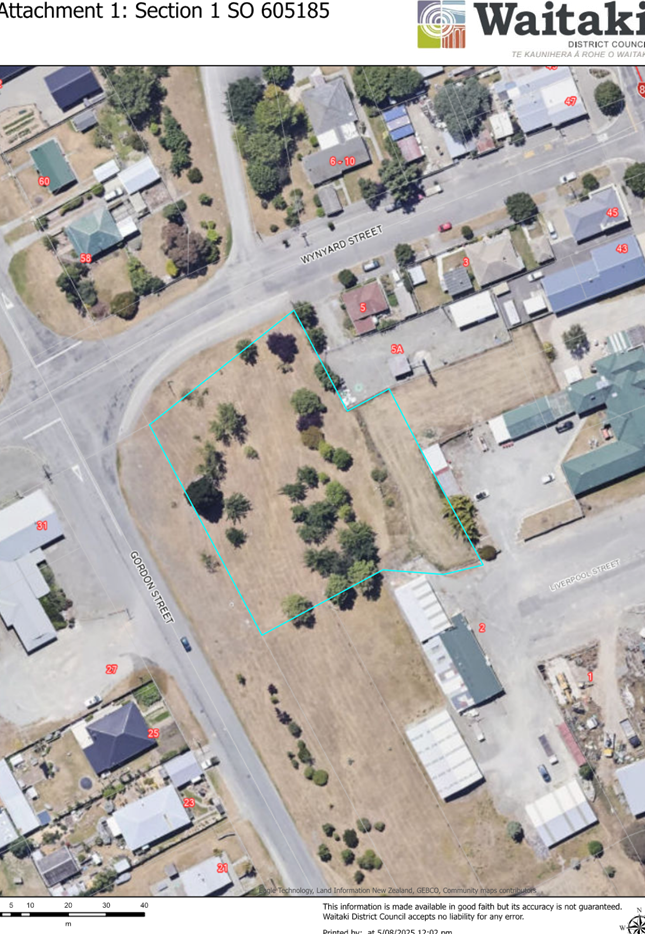
|
Council
Meeting Agenda
|
26 August 2025
|
7.4 Palmerston
Squash Racquets Club - Gifting of Building
Author: Suzanne
Clark, Property Officer
Recommender: Claire
Foster, Commercial & Property Lead
Authoriser: Joanne
O'Neill, Director Strategy, Performance, and Design
Purpose
To seek Council’s approval to gift the building
located at 33 Gilligan Street, Palmerston, to the Palmerston Squash Racquets
Club (the Club), a not-for-profit community organisation, to support local
sports.
executive summary
The Palmerston Squash Racquets Club
operates from a Council-owned building at 33 Gilligan Street, constructed in
the mid-1980s on reserve land before Council assumed ownership following the
Club's loan default in 1989. The current lease has expired with revenue
insufficient to cover costs, while approximately $20,000 in maintenance is
required for water ingress issues with no Council budget available. Council
currently subsidises the Club through below-market rent and building
maintenance contributions, creating an ongoing ratepayer burden.
The Club have indicated that their
preferred option is to transfer building ownership to the Club by way of a
gift, under a peppercorn ground lease, with the Club assuming full
responsibility for all maintenance, rates, insurance and outgoings. This approach
eliminates the ratepayer subsidy, avoids the need for Council loan funding,
enhances the Club's grant funding opportunities, and has the support of the
Waihemo Community Board (Resolution WCB2025/010). While the transfer results in
an accounting loss on the $241,000 book value, there is no cash impact to
Council. Risk mitigation includes ground lease clauses requiring that the
building is to be removed or revert to Council ownership if the club ceases
operations or is wound up.
|
OFFICER
Recommendation
That Council:
1. Approves
the transfer by way of gift to the Palmerston Squash Racquets Club, the
Palmerston squash courts building located at 33 Gilligan Street, Palmerston
on Section 82 Block XXXIII Town of Palmerston.
2. Delegates
authority to the Chief Executive to conclude the transfer of the building.
|
decision-making expectations
|
Governance
Decision-Making:
|
Approve proposal to
transfer by way of gift to the Palmerston Squash Racquets Club, the
Palmerston squash courts building located at 33 Gilligan Street on Section 82
Block XXXIII Town of Palmerston.
|
|
Operational Decision-Making:
|
Delegate Chief
Executive to implement Council’s resolution including the transfer of
the building and ground lease with the squash club.
|
|
Communications
|
Media Releases –
contributed to by officers and Elected Members
Media/public enquiries
regarding governance decision-making topics above can be addressed by
governance
Media/public enquiries
regarding operational decision-making topics above can be addressed by
officers
|
Summary of Decision-Making Criteria
|
|
No/Moderate/Key
|
|
No/Moderate/Key
|
|
Policy/Plan
|
Moderate
|
Environmental Considerations
|
No
|
|
Legal
|
Moderate
|
Cultural Considerations
|
No
|
|
Significance
|
No
|
Social Considerations
|
No
|
|
Financial Criteria
|
No
|
Economic Considerations
|
No
|
|
Community Views
|
No
|
Community Board Views
|
No
|
|
Consultation
|
No
|
Publicity and Communication
|
No
|
context, analysis and advice
Background
The Palmerston squash courts building is located at 33
Gilligan Street, Palmerston – see Image A. Although the squash building
has technically been owned by Council since amalgamation with Waihemo County
Council (WCC), it was only added to the Council’s asset register in 2022.
Image A

The Club is a rural affiliate of Squash NZ, currently
operating with 29 members. While membership numbers are lower than the average
for rural squash clubs in New Zealand, the Club remains active and financially
stable. Historically, the Club has sought support from Council during periods
of declining membership.
The Club constructed their facility on Council reserve land
in the mid-1980s using community fundraising ($150,000) and a loan ($50,000).
When the Club defaulted on loan payments in 1989, WCC assumed ownership and
loan obligations, leasing the building back to the Club for 33-years at market
rent.
Under the 1989 lease, the Club was responsible for all
interior and exterior maintenance and paid market rent. In 2022, a new lease
shifted some maintenance responsibilities to the Council. These now align more
closely with a standard commercial tenancy, though the Club pays below-market
rent and no outgoings, resulting in a ratepayer subsidy for building
maintenance and a top-up for rates and insurance costs. The Club has maintained
the building’s interior and funded improvements.
Despite a 1999 community board recommendation to transfer
ownership back to the Club, financial constraints of the Club prevented
completion. The Club experienced intermittent financial difficulties from this
time resulting in rent reductions and rates arrears. In 2022, Council resolved
to remit penalties ($2,634.99), require payment of rates arrears ($7,529),
provide building upgrade funding ($3,700), and set rent at $60 per member
annually.
The lease expired with revenue insufficient to cover costs.
Negotiations for renewal stalled over rent levels, and approximately $20,000 in
building maintenance was identified with no council budget available.
On 7 July 2025, the Waihemo Community Board resolved
(WCB2025/010) to support transferring building ownership to the club for a
nominal fee, with the club assuming responsibility for rates, insurance and
maintenance under a ground lease arrangement.
Current maintenance requirements are limited to the changing
rooms, where water ingress is affecting windows, reveals and the subfloor area
immediately under the showers. The cost to fully repair the damage is
approximately $20,000.
Financial Considerations
The original loan balance at 1989 amalgamation is
untraceable, however records show an outstanding balance of $40,000 in June
1994. This loan was fully repaid by June 2004 through rates levied on Waihemo
properties.
The building was added to Council's asset register in 2022
at $241,000 book value, with component useful lives ranging 9-35 years. Asset
disposal would generate an accounting loss but no cash impact to Council.
Summary of Options
Considered
Option 1 –Transfer by way
of gift to the Palmerston Squash Racquets Club, the Palmerston squash courts
building located at 33 Gilligan Street, Palmerston on section 82 Block
XXXIII Town of Palmerston and grant a peppercorn ground lease.
The proposal encompasses the existing building only,
transferred on an as-is basis. The Club would assume responsibility for all
maintenance costs and outgoings under a peppercorn rental arrangement, subject
to any future community rent policy.
|
Advantages
|
Disadvantages
|
Risks
|
|
· The Club assume full responsibility and cost
liability for all building maintenance, rates and other outgoings.
· Loan funding for repairs is not required - no
ratepayer subsidy.
· Supports and aligns with Council’s Recreation
Strategy.
· Will increase the likelihood of the Club receiving
grant funding for building improvement projects.
· Ground lease conditions can include clauses for
improvements removal or ownership reverting to the Council if the Club were
wound-up.
· No ratepayer subsidy in the short to medium term as
the Club will become responsible for all maintenance, rates and insurance.
· Waihemo Community Board supports this option.
|
· If the Club is wound-up, despite protections in the
ground lease, Council may inherent a building that is further deteriorated.
2.
|
· Given the limited population base from which to draw
membership, there remains a risk that Council financial assistance may be
sought in the longer term or that the Club is wound-up and that Council
inherits a building that is further deteriorated.
3.
|
Option 2 – Status quo
|
Advantages
|
Disadvantages
|
Risks
|
|
· Building will be maintained to standard, maximising
useful life.
· Will enable Club membership fees to be kept
affordable for the community.
|
· Immediate and ongoing ratepayer subsidy would be
required.
· Does
not align with Council’s Recreation Strategy.
|
· Perceived inequity from other clubs.
· May set a precedent of assistance for other clubs.
|
Option 3 – Consult in
the Annual Plan to introduce a Palmerston Hall rate to fund squash building
maintenance, with the building administered by a hall committee.
|
Advantages
|
Disadvantages
|
Risks
|
|
· Additional maintenance funding will be sourced from
the community where the benefit is delivered.
|
· No guarantee that the community will engage with any
proposal or accept a targeted rate.
· Introduces a third party to any agreement.
· Does not align with Council’s Recreation
Strategy
|
· Perceived inequity from other clubs.
· May set a precedent of assistance for other clubs.
· May not derive enough revenue to cover all
maintenance requirements.
4.
|
Assessment of Preferred
Option
The preferred option is to gift the
building to the Club and grant a peppercorn ground lease that requires the Club
to pay all rates demanded. This option is the preferred approach as it delivers
optimal outcomes for both Council and the community. The Club are supportive of
this approach and are resistant to any option requiring a rent amount that
covers all outgoings as well as a contribution towards building maintenance.
Other Council teams, as operational landowner and asset owner support the
transfer proposal as do the Waihemo Community Board.
Conclusion
Gifting the
Palmerston Squash Racquets Club building and establishing a peppercorn ground
lease represents the most strategic and financially responsible approach for
Council. This solution eliminates the immediate $20,000 repair liability and
ongoing ratepayer subsidies while transferring full operational responsibility
to the Club.
The
arrangement aligns with Council's Recreation Strategy by enabling club
self-sufficiency and investment in their facility, while providing Council with
appropriate safeguards through ground lease provisions. By removing barriers to
grant funding access and ensuring cost recovery objectives are met, this option
delivers sustainable community recreation infrastructure without ongoing
financial burden to ratepayers.
The transfer
effectively resolves the longstanding lease impasse while maintaining community
access to squash facilities through a financially viable club structure, making
it the optimal solution for all stakeholders.
Next Steps
The Commercial and Property Team
will negotiate a new ground lease with the Club and arrange transfer of the
building to the Club upon signing of the agreement.
Additional Decision-Making Considerations
Waitaki District Council Strategic Framework
Outcomes
Community Outcomes
Prosperous District
· Fostering
a diverse and resilient economy
Strong Communities
· Enabling
safe, healthy communities
· Connected,
inclusive communities
Quality Services
· Community
facilities and services we are proud of
Policy
and Plan Considerations
The recommendation aligns with Council’s Recreation
Strategy by creating an opportunity for the Club to create a ‘strong
recreation club environment’. The Club will be motivated to invest
in their future and invest in a building they own. Enabling Club success
contributes to a higher level of physical activity in the district. The
Strategy has a target of 100% of costs associated with clubroom use being
recovered. Council typically provides facilities able to be used by multiple
users such as general playing fields and the Events Centre currently under
construction. There is no known precedent for Council to retain and maintain a
single code purpose-built building at the ratepayer’s cost and to
subsidise the cost of rates and insurance.
Legal
Considerations
The preferred option complies
with Council’s legal obligations for disposing of assets under the Local
Government Act 2002 section 12 and section 14.
The Reserves Act governs the
process to be followed when considering granting a lease of any reserve land.
|
Council
Meeting Agenda
|
26 August 2025
|
7.5 Ratification
of Submissions on Changing Resource Management National Directions
Author: David
Campbell, Heritage & Planning Manager
Authoriser: Roger
Cook, Director Natural and Built Environment
Attachments: 1. WDC
submission RM national directions packages 1 and 2 ⇩
2. WDC
submission RM national direction package 3 ⇩
3. WDC
submission RM national direction package 4 ⇩ 
|
Recommendation
That Council:
1. Formally
ratifies Waitaki District Council’s submissions on updating RMA
national direction, as submitted to the Ministry for the Environment on 25
July 2025.
|
Decision Objective
To retrospectively ratify Waitaki
District Council’s (WDC’s) submissions on Resource Management Act
(RMA) national direction packages, being Infrastructure and Development,
Primary Sector, Freshwater and Going for Housing Growth, as submitted to the
Ministry for the Environment on 25 July 2025.
Summary
Government is
implementing the most significant resource management reforms in decades, with
the changes affecting how we manage land use, infrastructure, and environmental
protection. These changes will affect how Council processes applications, what
activities need consents and permits, and how we balance environmental
protection with economic development. The proposed national direction changes
represent a shift from the current environment-first hierarchy to a balanced
framework giving equal weight to economic, social, and environmental factors.
Critically, these
reforms centralise decision-making power, moving away from local discretion
toward standardised national approaches that risk undermining community voice
in shaping their own development futures. This centralisation threatens to
erode local democracy by reducing opportunities for meaningful community input
on development priorities and environmental protections that reflect distinct
local values and character. The impact is amplified by concurrent legislative
changes including the Local Government Systems Improvements Bill and the
Building and Construction (Small Stand-Alone Dwellings) Amendment Bill—on
which Council also recently submitted concerns. Together, these reforms signal
a systematic reduction in local government autonomy and community participation
in critical planning decisions that will shape our district's future.
Council’s submission raises
concerns around the current resource management reform programme, which
represent a piecemeal response to coalition government priorities rather than
systematic reform. The submission outlines that proposed changes to national
directions also create cumulative environmental trade-offs by weakening
landscape, biodiversity and heritage protections through more enabling consent
pathways across national directions, along with multiple objectives required to
be given equal weighting. Concerns have also been raised that system
fragmentation persists with unresolved conflicts between national instruments,
whilst planning gaps fail to address cumulative development impacts and
overlook critical rural infrastructure constraints.
Council’s
submission supports enabling appropriate growth and infrastructure but requires
a balanced approach that maintains local flexibility within national
frameworks. The submission highlights that too often, rural and provincial
areas are sacrificed for large scale projects that deliver few local benefits,
but the ongoing legacy of their often-irreversible effects on the environment.
Many of the proposed changes to national direction will further exacerbate this
issue.
The submission
also asks that resource management reforms must include meaningful community
consultation, maintain democratic input in planning decisions, and provide
substantial capacity building support to enable successful implementation
without compromising local character and identity.
decision-making expectations
|
Governance
Decision-Making:
|
To approve the
submission (retrospectively)
|
|
Operational Decision-Making:
|
The submission has been
lodged.
|
|
Communications
|
Media Releases –
contributed to by officers and Elected Members if required
Media/public enquiries
regarding governance decision-making topics above can be addressed by
governance
Media/public enquiries
regarding operational decision-making topics above can be addressed by
officers
|
Summary of Decision-Making Criteria
|
|
No/Moderate/Key
|
|
No/Moderate/Key
|
|
Policy/Plan
|
Key
|
Environmental Considerations
|
Moderate
|
|
Legal
|
No
|
Cultural Considerations
|
Moderate
|
|
Significance
|
No
|
Social Considerations
|
No
|
|
Financial Criteria
|
No
|
Economic Considerations
|
Moderate
|
|
Community Views
|
No
|
Community Board Views
|
No
|
|
Consultation
|
No
|
Publicity and Communication
|
No
|
Background
National direction supports local decision-making under the
RMA, and includes national policy statements, national environmental standards,
national planning standards and regulations. It can direct plan changes,
provide guidance for resource consent decisions and introduce nationally
consistent rules and environmental standards.
Targeted amendments to existing national instruments have
been proposed, plus four new national direction instruments. These are
summarised below:
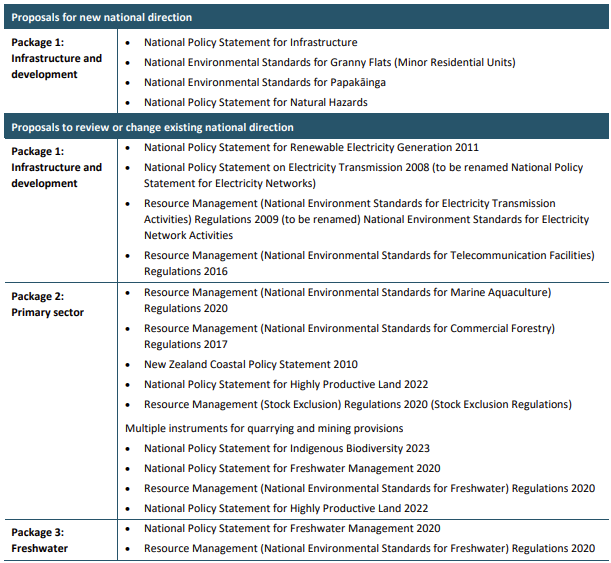
Package 4 proposes to address Going for Housing Growth and
does not make any changes to existing national direction under the RMA.
Instead, feedback on the discussion document will be used to inform
officials’ thinking on policy development for Phase 3 of resource
management reform.
It is structured around three pillars that make system
changes to address the underlying causes of the housing supply shortage.
These are:
· Pillar
1: Freeing up land for urban development, including removing unnecessary
planning barriers
· Pillar
2: Improving infrastructure funding and financing to support urban growth
· Pillar
3: Providing incentives for communities and councils to support growth.
Key policy shifts include:
1. Environmental Primacy → Balanced Objectives
Moving from hierarchical decision-making (environment first,
people/economy second) to multiple objectives with equal weight. Infrastructure
benefits and economic development now balanced against environmental effects.
2. Prescriptive Rules → Risk-Based Management
Replacing blanket restrictions with site-specific risk
assessments. Natural hazards, forestry slash management, and freshwater all
move to risk-proportionate approaches.
3. Local Discretion → National Consistency
Standardising rules across councils to reduce uncertainty
and compliance costs. Consistent terminology, consent pathways, and national
standards for key activities.
4. Consent-Heavy → Permitted Activities
Streamlining development by making more activities permitted
without consent: granny flats, water storage, infrastructure maintenance,
telecommunications upgrades.
5. Regulatory Barriers → Development Enablement
Proactively supporting critical infrastructure, housing, and
economic development. Enhanced policy support for renewable energy, Māori
development, and priority activities.
6. Rigid Standards → Flexible Local Application
Allowing councils to deviate from national standards where
justified by local conditions, while maintaining core environmental
protections.
Council’s submission is included as Attachments 1-4.
Council was party to Taituarā’s submission on
this matter and generally endorsed Taituarā’s submission.
Summary of Options Considered
Option 1
– Formally ratify Council’s submissions on changing resource
management national directions as submitted to Ministry for the Environment on
25 July 2025 (Recommended)
Option 2
– Do not formally ratify Council’s submissions on changing
resource management national directions as submitted to Ministry for the
Environment on 25 July 2025.
Assessment of Preferred Option
Draft submissions were
pre-circulated to the Governance Team on 11 July 2025 and discussed at the
Councillor briefing on 8 July 2025.
The submissions were sent to Ministry for the Environment on
25 July 2025 to meet the limited consultation timeframes. Therefore
Option 1 is the only viable option.
Conclusion
By lodging a submission on the national direction packages
will help inform government of the aspects Council supports, opposes or is
neutral to but seeks changes be made.
Additional Decision-Making Considerations
Waitaki District Council Strategic Framework
Outcomes
Community Outcomes
Prosperous District
· Attractive
to new opportunities
· Supporting
local businesses
· Fostering
a diverse and resilient economy
Strong Communities
· Enabling
safe, healthy communities
· Connected,
inclusive communities
· Promoting
a greater voice for Waitaki
· Celebrating
our community identity
Quality Services
· Robust
core infrastructure and services
· Community
facilities and services we are proud of
Valued Environment
· Protecting
our diverse landscapes and water bodies
· Meeting
environmental and climate change challenges
Policy
and Plan Considerations
The national direction packages will have a flow on effect
to the District Plan, once the national direction instruments are enacted.
Community
Views
N/A – the community could have submitted on the
national direction packages.
Financial
Considerations
Nil – the submission was prepared in house.
Legal
Considerations
None
Environmental
Considerations
The national direction packages address some environmental
matters.
Publicity
and Community Considerations
Nil
|
Council
Meeting Agenda
|
26 August 2025
|
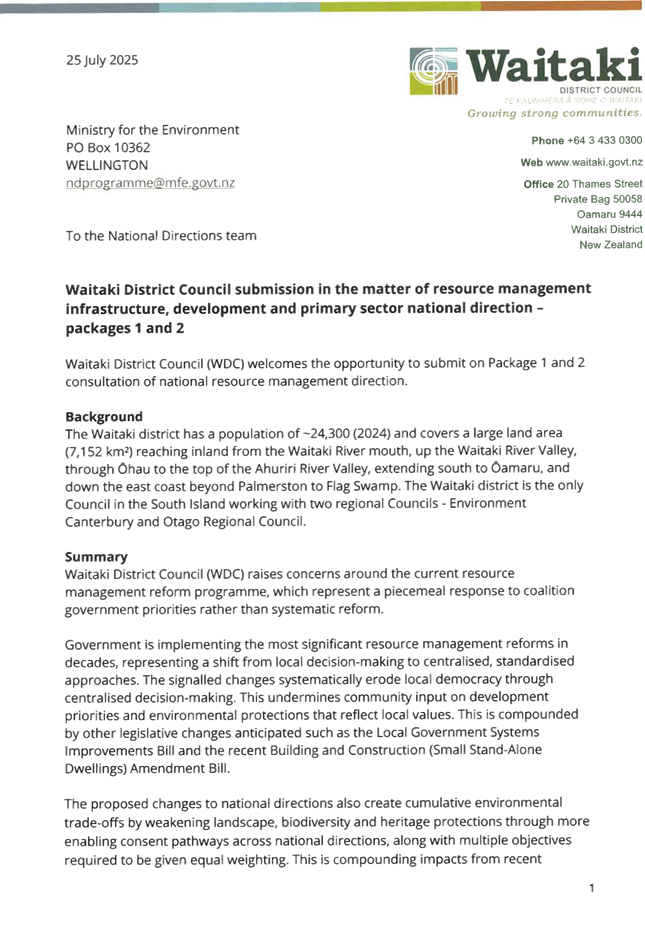
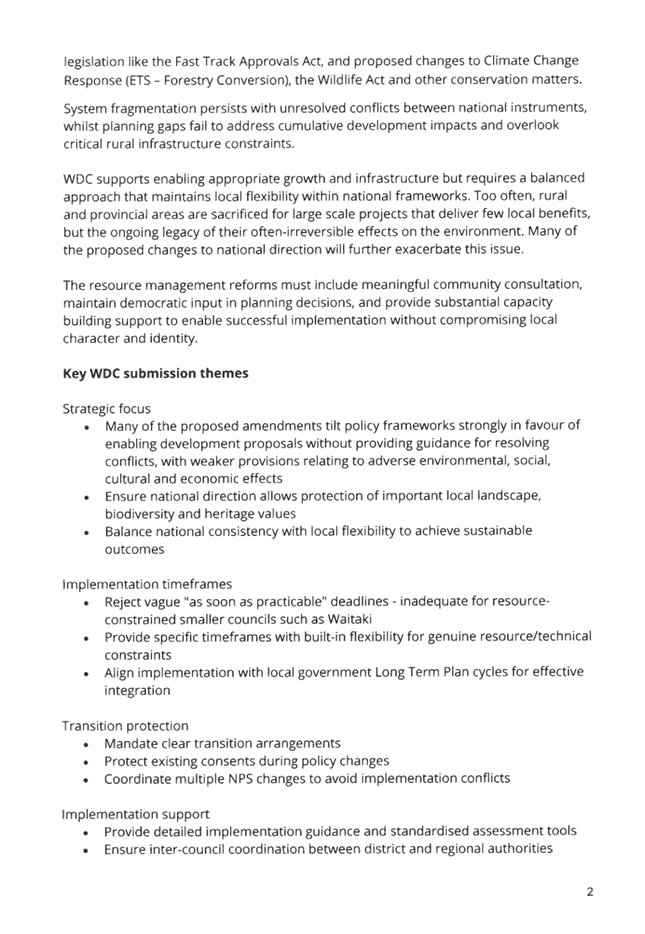
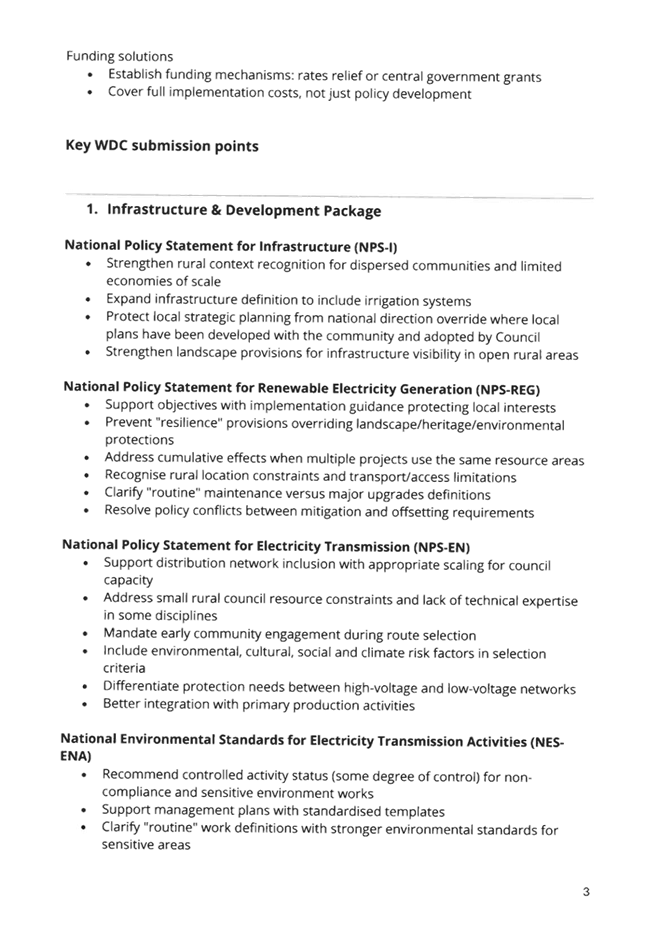
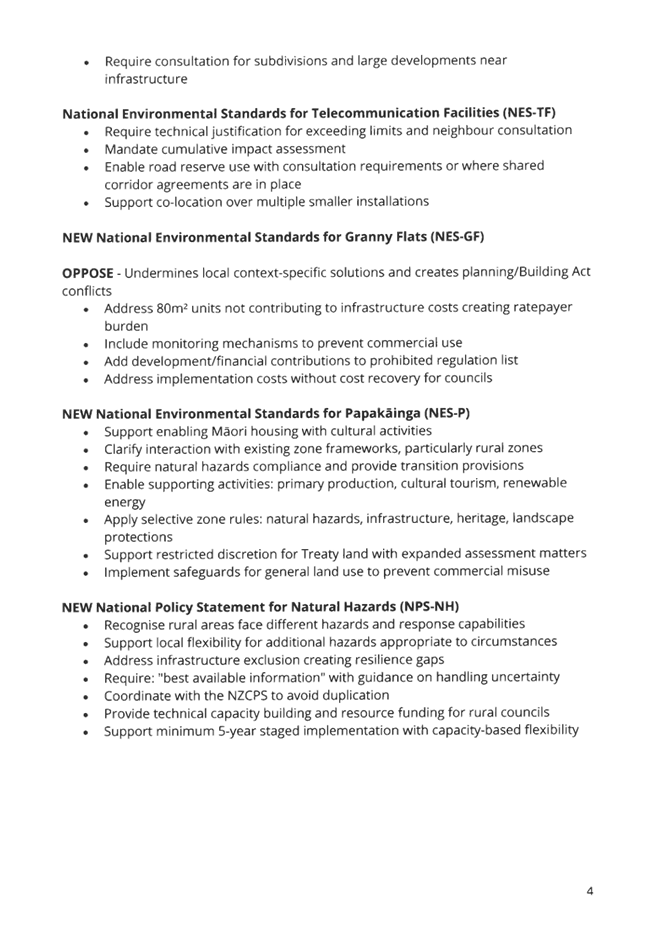
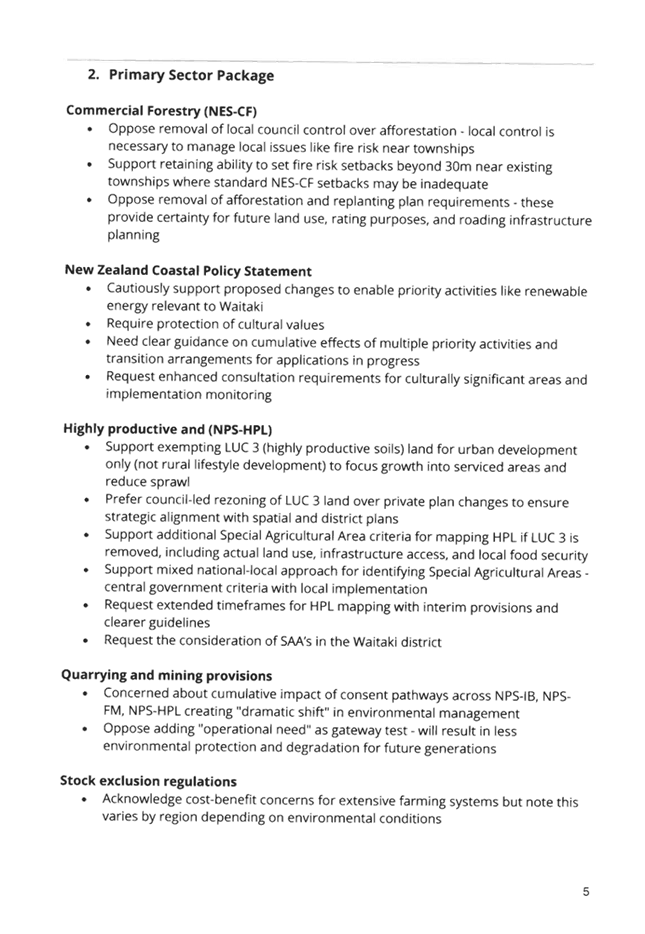
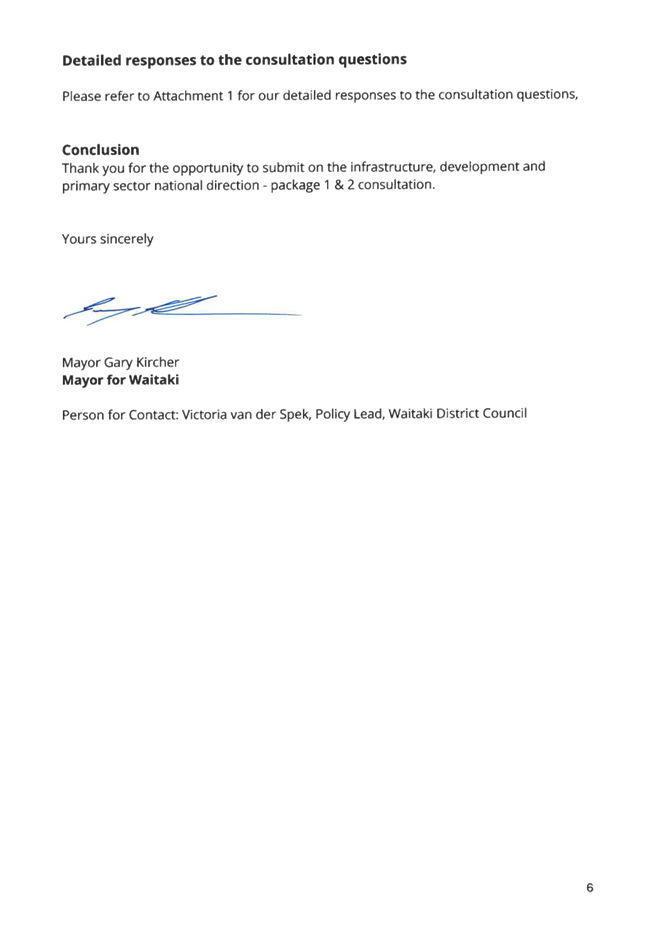
|
Council
Meeting Agenda
|
26 August 2025
|
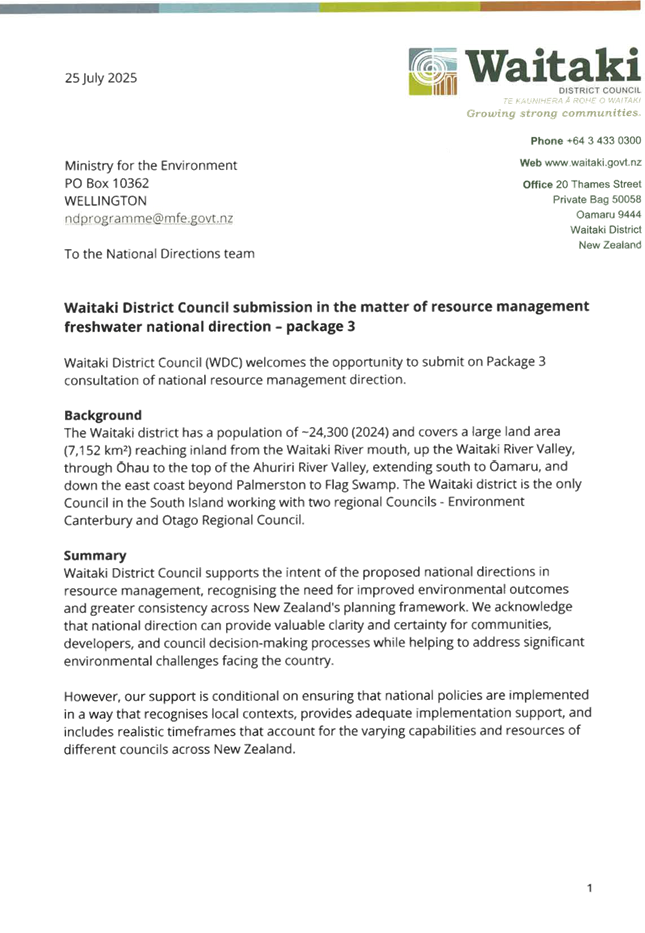
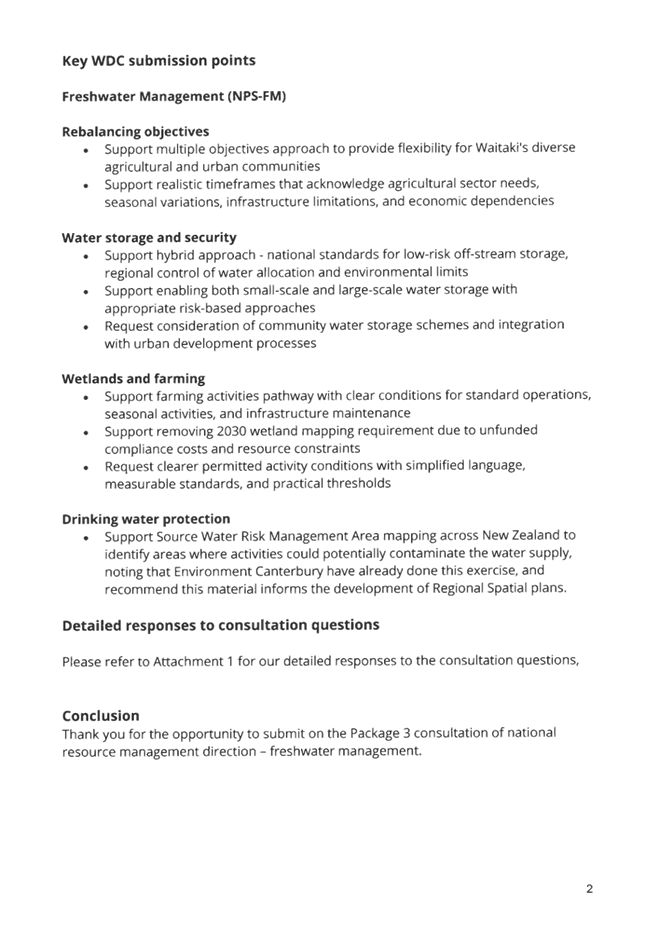

|
Council
Meeting Agenda
|
26 August 2025
|
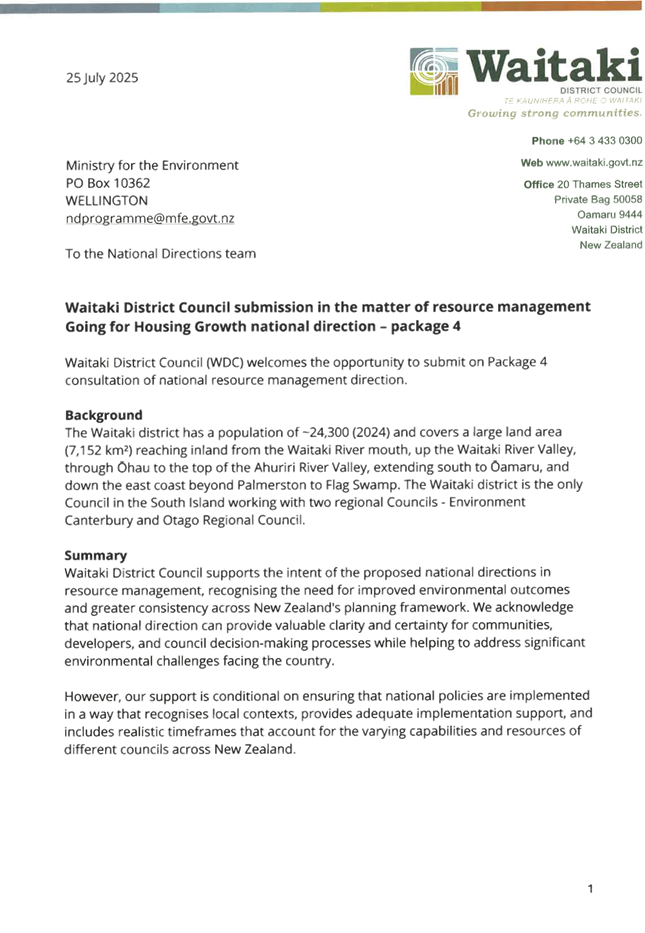
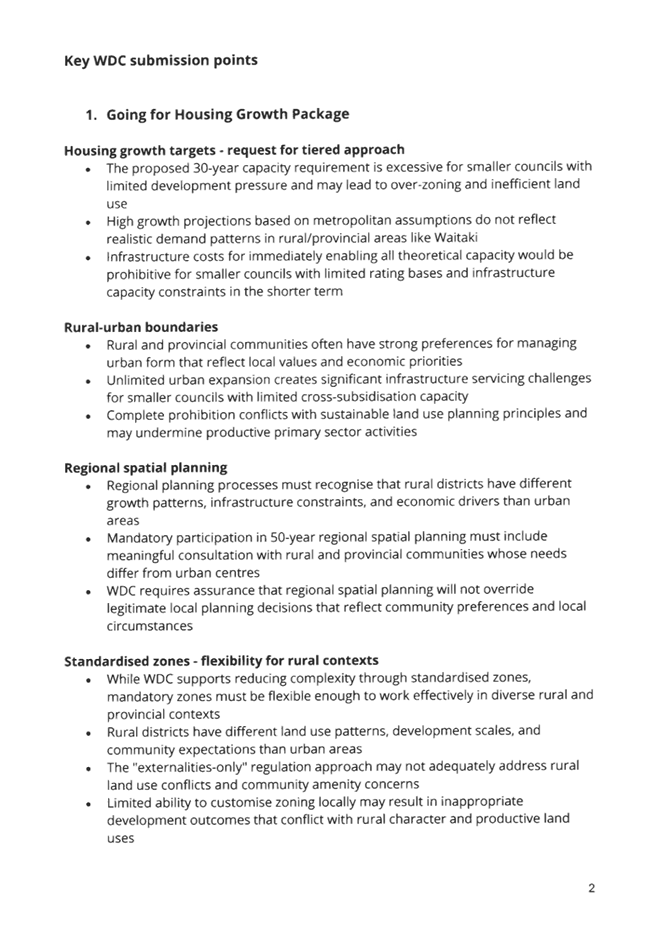

|
Council
Meeting Agenda
|
26 August 2025
|
7.6 Development
Contributions Decisions Made Under Delegated Authority
Author: Mandy
McIntosh, Strategy and Commissioning Lead
Authoriser: Joanne
O'Neill, Director Strategy, Performance, and Design
|
Recommendation
That Council receives and notes the information.
|
Purpose
The purpose of this report is to
inform Council of the decisions made by the Development Contributions
Subcommittee under delegated authority.
Summary
The Development Contributions
Subcommittee has made two decisions on requests for reconsideration of
development contributions under delegated authority since September 2024.
Under delegated authority, the
Development Contributions Subcommittee has made four recommendations to
Council, and Council has made four decisions on requests for reconsideration of
Development Contributions since September 2024. These matters were
discussed and decided by Council in Public Excluded sessions of Council
Meetings.
A summary of the key aspects of
those decisions is provided below.
DISCUSSION
The Development Contributions
Subcommittee has the power to act to reduce, waive or defer development
contributions on any one development up to the amount of $40,000 excluding GST,
and the power to recommend to Council to reduce, waive, or defer development
contributions in excess of $40,000 excluding GST.
Officers have the authority to
decide on a request for waiver, review or deferral of development contributions
if the sum involved is less than $5,000 excluding GST.
There have been four decisions made
by Council, and two decisions made by the Development Contributions Committee
under delegated authority since last reported to Council through the Council
Activity Update in September 2024.
The summary of key aspects of those
decisions is provided for Council’s information.
Summary of Decisions Made Under Delegated
Authority
There have been four
recommendations to Council made under the delegated authority of the
Development Contributions Committee since the last report to Council in the
September 2024 Council Activity Update.
Property
Address
|
Date
|
Decision
Requested
|
Decision
Made
|
|
Kenilworth
Road, Oamaru
|
July 2025
|
Defer
payment of development contributions and financial contributions.
|
Deferred
to allow payment on the settlement of sale of each lot, with the balance due
in 24 months.
|
|
Taward
Street, Oamaru
|
Feb 2025
|
Reconsider
development contributions.
|
Special
assessment reduced the level of development contributions required.
|
|
Sussex
Street, Weston
|
Oct 2024
|
Defer
payment of water and wastewater development contributions and financial
contributions.
|
Delegated
decision to DC Subcommittee.
|
|
Pinot
Noir Court, Omarama
|
Sept 2024
|
Defer
payment of development and financial contributions.
|
Deferred
to allow payment on the settlement of sale of each lot, with the balance due
in 24 months.
|
|
|
|
|
|
|
There have been 2 decisions made under the delegated
authority of the Development Contributions Committee and confirmed since the
last report to Council in the September 2024 Council Activity Update.
Property
Address
|
Date
|
Decision
Requested
|
Decision
Made
|
|
Fiveforks
|
May 2025
|
Waive
water development contributions.
|
Waived
water development contributions as the activity was excluded from
“commercial activity” under the Policy.
|
|
Sussex
Street, Weston
|
Feb 2025
|
Defer
payment of water and wastewater development contributions and financial
contributions.
|
Deferred
to allow payment over 24 months with balance to be paid on sale of the 4th
lot if sold prior to 24 months.
|
|
Council
Meeting Agenda
|
26 August 2025
|
8 Resolution
to Exclude the Public
|
Recommendation
That the public be excluded from the following parts of
the proceedings of this meeting.
The general subject matter of each matter to be considered
while the public is excluded, the reason for passing this resolution in
relation to each matter, and the specific grounds under section 48 of the
Local Government Official Information and Meetings Act 1987 for the passing
of this resolution are as follows:
|
General subject of each matter to be
considered
|
Reason for passing this resolution in
relation to each matter
|
Ground(s) under section 48 for the
passing of this resolution
|
|
9.1 - Buzan Road Quarry Lease -
Seeking Council Direction
|
s7(2)(b)(ii) - the withholding of the information
is necessary to protect information where the making available of the
information would be likely unreasonably to prejudice the commercial
position of the person who supplied or who is the subject of the information
s7(2)(h) - the withholding of the information is
necessary to enable Council to carry out, without prejudice or
disadvantage, commercial activities
|
s48(1)(a)(i) - the public conduct of the relevant
part of the proceedings of the meeting would be likely to result in the
disclosure of information for which good reason for withholding would exist
under section 6 or section 7
|
|
9.2 - 2025 Council Controlled
Organisation Directorships
|
s7(2)(a) - the withholding of the information is
necessary to protect the privacy of natural persons, including that of
deceased natural persons
|
s48(1)(a)(i) - the public conduct of the relevant
part of the proceedings of the meeting would be likely to result in the
disclosure of information for which good reason for withholding would exist
under section 6 or section 7
|
|
9.3 - Public Excluded minutes of the
Council Meeting held on 29 July 2025
|
s7(2)(h) - the withholding of the information is
necessary to enable Council to carry out, without prejudice or
disadvantage, commercial activities
|
s48(1)(a)(i) - the public conduct of the relevant
part of the proceedings of the meeting would be likely to result in the
disclosure of information for which good reason for withholding would exist
under section 6 or section 7
|
|
|
Council
Meeting Agenda
|
26 August 2025
|
9 Public
Excluded Section
10 Resolution
to Return to the Public Meeting
|
Recommendation
That Council resumes in open meeting and decisions made in
public excluded session are confirmed and made public as and when required
and considered.
|
11 Release
of Public Excluded Information
12 Meeting
Close